
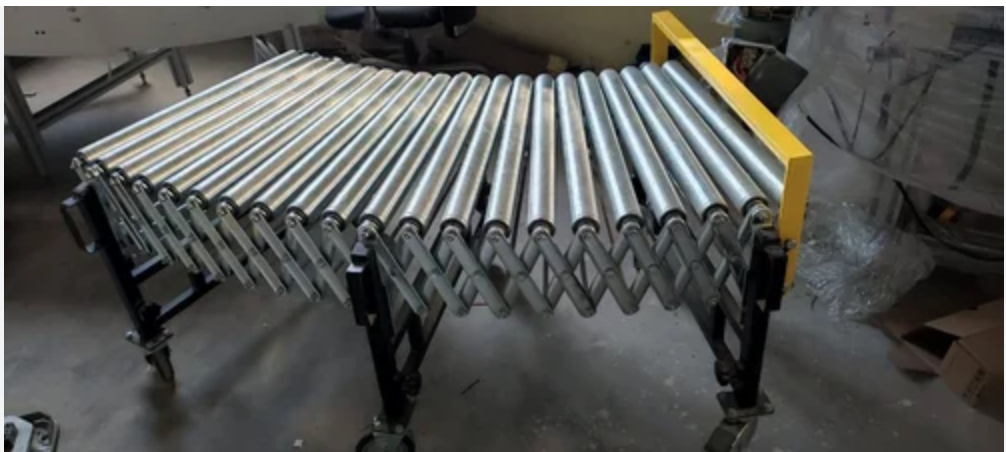
Flexible roller conveyor design has transformed the way warehouses and distribution centers manage material handling. As businesses continue to face increasing order volumes, tighter delivery schedules, and the need for greater operational efficiency, investing in adaptable conveyor solutions has become more important than ever. Unlike fixed conveyor systems, flexible roller conveyors provide the versatility to accommodate changing warehouse layouts while ensuring smooth product movement.
Warehousing operations require equipment that not only improves productivity but also optimizes available space and reduces manual handling. A well-engineered flexible roller conveyor design meets these requirements by offering mobility, scalability, and reliable performance across various industrial applications.
Understanding Flexible Roller Conveyor Design
A flexible roller conveyor design is developed to provide a movable and expandable conveying solution for warehouses, manufacturing units, logistics hubs, and distribution centers. These conveyors consist of interconnected roller sections that can be extended, contracted, or curved according to operational requirements.
Unlike permanent conveyor installations, flexible roller conveyors can be repositioned quickly to accommodate different loading docks, packaging stations, or storage areas. This flexibility makes them an excellent choice for businesses that frequently modify warehouse layouts or handle varying shipment volumes.
Why Warehousing Operations Need Flexible Conveyor Solutions
Modern warehouses manage thousands of products daily. Efficient transportation between receiving, storage, packing, and shipping areas is essential for maintaining productivity.
Traditional manual movement often creates several operational challenges, including:
- Increased labor requirements
- Delayed order processing
- Product handling errors
- Congested workspaces
- Higher operating costs
A flexible roller conveyor design addresses these issues by creating an organized and efficient material flow throughout the warehouse.
Maximizing Warehouse Space
One of the biggest challenges warehouses face is making the best use of available floor space. Fixed conveyor systems may limit future expansion or changes in workflow.
A flexible roller conveyor can easily be adjusted or relocated whenever operational requirements change. Because the conveyor can be expanded, folded, or repositioned, businesses can maximize storage capacity without compromising accessibility.
This flexibility allows warehouse managers to:
- Create temporary conveying lines
- Rearrange workstations efficiently
- Optimize loading and unloading areas
- Improve traffic flow within the warehouse
Better space utilization directly contributes to improved operational efficiency.
Improving Loading and Unloading Efficiency
Loading docks are among the busiest areas in any warehouse. Delays during loading and unloading can disrupt the entire supply chain.
A flexible roller conveyor design simplifies these operations by creating a direct pathway between storage areas and transportation vehicles. Workers spend less time manually moving cartons, packages, and materials, allowing trucks to be loaded and unloaded much faster.
Faster loading operations result in:
- Reduced vehicle waiting times
- Increased shipment capacity
- Improved delivery schedules
- Better customer satisfaction
Supporting High-Volume Distribution Centers
E-commerce growth has significantly increased warehouse activity. Distribution centers must process large numbers of orders while maintaining speed and accuracy.
Flexible roller conveyors support high-volume operations by providing continuous product movement throughout the warehouse. Since these conveyors can be positioned wherever they are needed, they help warehouses adapt to seasonal demand fluctuations without investing in permanent infrastructure.
Their adaptability makes them particularly valuable for businesses experiencing rapid growth.
Reducing Manual Material Handling
Manual transportation of products consumes time and increases employee fatigue. Repetitive lifting, carrying, and pushing heavy packages can also increase the risk of workplace injuries.
Implementing a flexible roller conveyor design significantly reduces manual handling by allowing products to move efficiently through designated conveyor paths.
Benefits include:
- Lower labor requirements
- Improved employee productivity
- Reduced physical strain
- Faster material movement
- Greater operational consistency
Employees can focus on more value-added tasks such as quality inspection, inventory management, and packaging.
Enhancing Workplace Safety
Warehouse safety is essential for maintaining productivity and reducing operational disruptions.
By reducing unnecessary manual lifting and organizing product movement, flexible roller conveyors contribute to a safer working environment. Proper conveyor layouts minimize congestion around workstations and loading docks, allowing employees to work more efficiently.
Improved safety often leads to:
- Fewer workplace accidents
- Lower injury-related expenses
- Better employee morale
- Higher operational reliability
Easy Installation and Mobility
Another major advantage of a flexible roller conveyor design is its ease of installation. Unlike permanent conveyor systems that require significant structural modifications, flexible conveyors can be deployed quickly with minimal disruption.
Their mobility enables warehouses to relocate the conveyor based on changing operational requirements. Whether supporting temporary packaging lines or additional loading bays during peak seasons, these conveyors provide exceptional flexibility.
Cost-Effective Warehouse Investment
Every warehouse aims to increase efficiency while controlling costs. Flexible roller conveyors provide long-term value by improving workflow without requiring expensive facility modifications.
Businesses benefit from:
- Lower labor costs
- Reduced handling time
- Improved order accuracy
- Increased operational efficiency
- Better return on investment
Because the system can be reused across different operational areas, it offers excellent value over its service life.
Versatile Applications Across Industries
A flexible roller conveyor design serves a wide variety of industries beyond warehousing.
Common applications include:
- E-commerce fulfillment centers
- Courier and parcel hubs
- Manufacturing facilities
- Packaging plants
- Retail distribution centers
- Automotive component warehouses
- Pharmaceutical logistics
- Food and beverage storage facilities
Its ability to adapt to different environments makes it one of the most versatile material handling solutions available.
Choosing the Right Flexible Roller Conveyor
Selecting the right conveyor depends on several operational factors, including product weight, conveyor length, available floor space, and expected throughput.
Businesses seeking reliable and high-quality conveyor solutions can explore:
These conveyor systems are designed to improve warehouse efficiency, streamline product movement, and support modern material handling requirements across various industries.
Working with an experienced conveyor supplier ensures the system is configured according to the unique needs of each warehouse.
The Future of Warehouse Material Handling
Warehousing continues to evolve with automation, robotics, and smart inventory systems becoming increasingly common.
Flexible roller conveyors will continue to play an important role by complementing automated workflows while providing the adaptability that fixed systems cannot offer.
Future developments are expected to include:
- Smarter conveyor monitoring
- Improved roller durability
- Enhanced load capacities
- Better integration with warehouse management systems
- More energy-efficient conveyor designs
These innovations will help warehouses achieve even greater productivity while maintaining operational flexibility.
Conclusion
A flexible roller conveyor design has become a preferred solution for warehousing applications because of its adaptability, mobility, and efficiency. It enables businesses to optimize warehouse layouts, reduce manual handling, improve loading operations, and enhance workplace safety without requiring permanent infrastructure changes.
As warehouses continue to expand and customer expectations rise, flexible roller conveyors provide the operational flexibility needed to meet changing business demands. Investing in a high-quality conveyor system allows organizations to improve productivity, reduce costs, and build a more efficient material handling process for long-term success.
Frequently Asked Questions
What is a flexible roller conveyor design?
A flexible roller conveyor design is a movable and expandable conveyor system that transports cartons, packages, and other materials efficiently within warehouses and distribution centers.
Why is a flexible roller conveyor ideal for warehouses?
It provides mobility, easy expansion, and quick reconfiguration, allowing warehouses to optimize space and improve material flow.
Which industries commonly use flexible roller conveyors?
Warehousing, logistics, manufacturing, retail distribution, e-commerce, packaging, pharmaceuticals, and food processing industries commonly use these conveyors.
How does a flexible roller conveyor improve productivity?
It reduces manual handling, speeds up loading and unloading, streamlines workflows, and minimizes operational delays.
Can flexible roller conveyors be relocated?
Yes. One of their key advantages is that they can be easily moved, extended, contracted, or repositioned to suit changing warehouse layouts.
Are flexible roller conveyors suitable for seasonal operations?
Yes. Their adaptable design makes them ideal for temporary workstations and peak-season warehouse operations where additional conveying capacity is required.
How do businesses choose the right flexible roller conveyor?
Businesses should evaluate product weight, conveyor length, available space, throughput requirements, and operational workflow before selecting a conveyor system.