Belt Conveyor Manufacturer in India for Factories, Warehouses and Packaging Lines
Tech Trek Engineering is a belt conveyor manufacturer in India and an industrial belt conveyor system supplier, building systems around the material, layout and throughput of each plant. With over 16 years of experience in conveyor systems, system integration and factory automation, we design, manufacture and support belt conveyors for manufacturing, packaging, logistics and warehouse operations.
Instead of selling one-size-fits-all equipment, we work with your team to understand the workflow, available space, load and production targets, and then engineer a belt conveyor system that integrates cleanly into your existing line.
Custom Material Handling Belt Conveyors
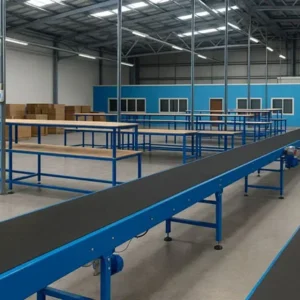
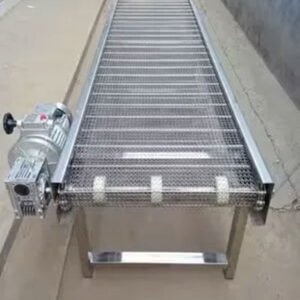
As a custom material handling belt conveyor manufacturer in India, we configure every conveyor to your requirement. Typical points we size with you include belt width and length, belt type, incline angle, drive and speed control, frame material and finish for your operating environment, and how the conveyor connects to upstream and downstream equipment. Our team supports you from design and manufacturing through installation guidance and after-sales support.
Industrial Belt Conveyor System Supplier for Every Industry
Our belt conveyor systems are used in FMCG, automotive, pharmaceutical and engineering industries, as well as warehouses and distribution centres, packaging and sorting facilities, and logistics and fulfilment operations.
Belt Conveyor FAQs
What is a belt conveyor?
A belt conveyor moves products or materials on a continuous belt looped around pulleys and driven by a motor. It is one of the most widely used material handling systems because it gives smooth, continuous, low-labour transport across factories, warehouses and packing lines.
What is the difference between a flat belt and a troughed belt conveyor?
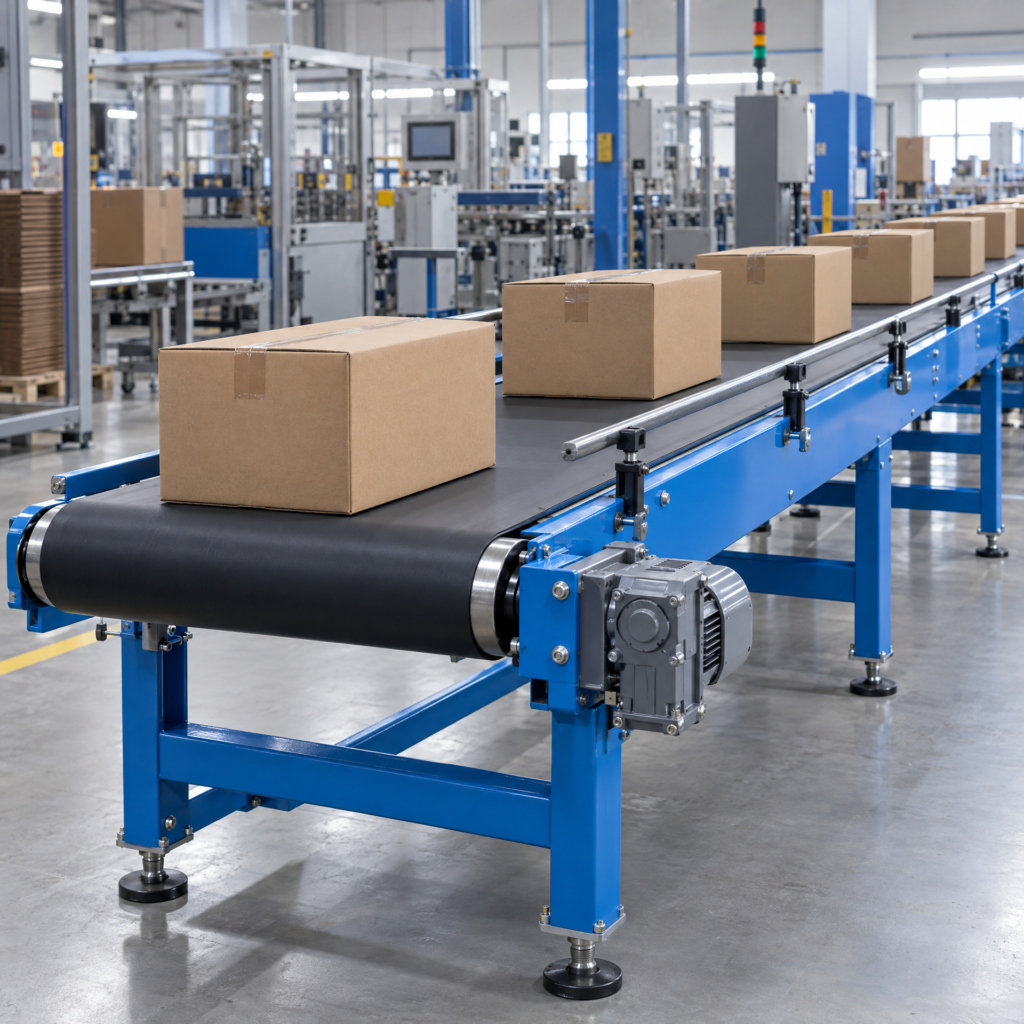
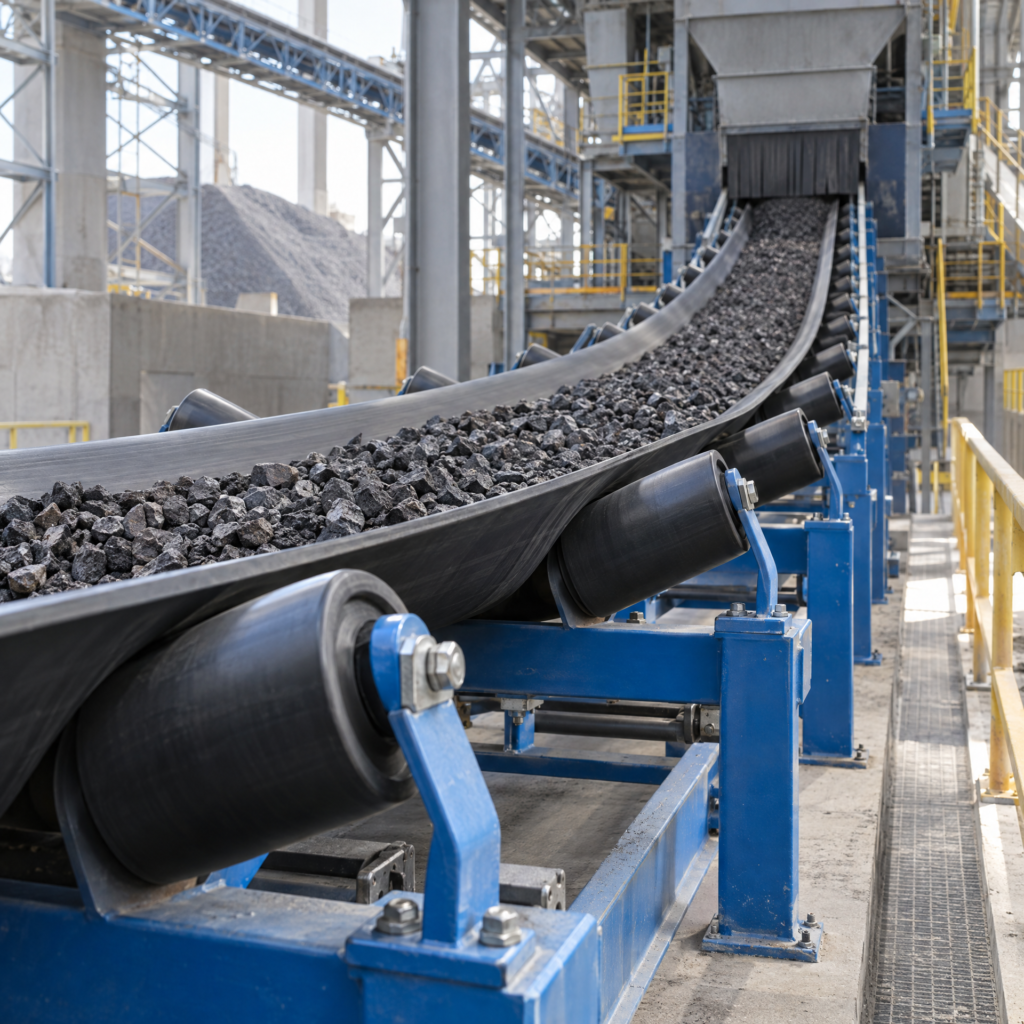
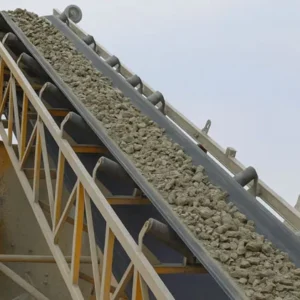
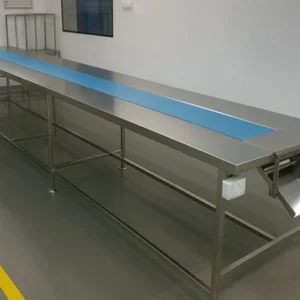
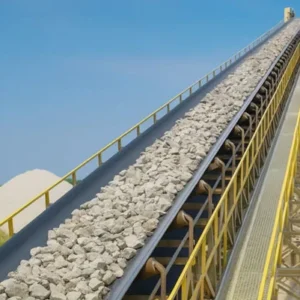
A flat belt conveyor carries individual items such as cartons, parts and packaged goods on a flat surface. A troughed belt conveyor has raised edges that form a trough, so it can carry loose bulk material without spilling it.
How does an inclined belt conveyor work?
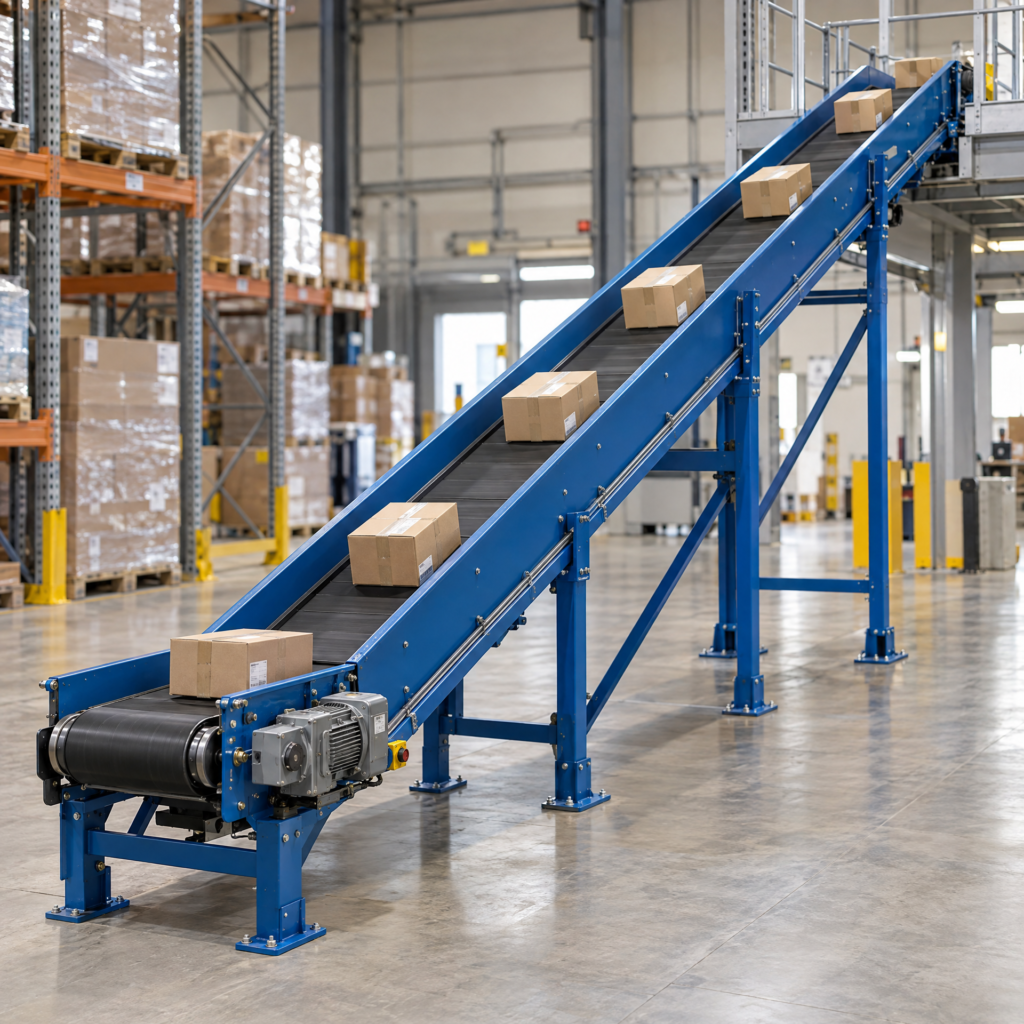
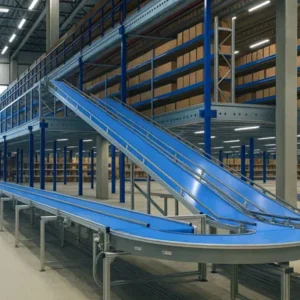
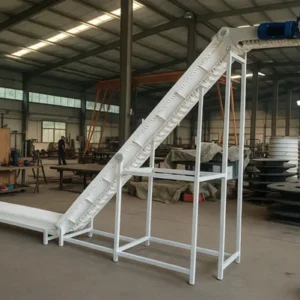
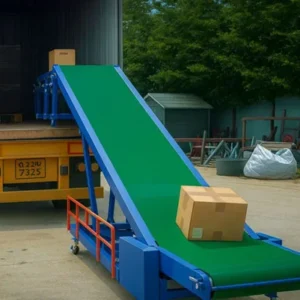
An inclined belt conveyor uses the same belt, pulley and drive arrangement set at an angle, so friction between the belt and the load carries material to a higher or lower level. For steeper angles, cleated or textured belt surfaces help keep the material from sliding back. The workable angle depends on the material and the belt surface.
What belt material is suitable for packaging lines?
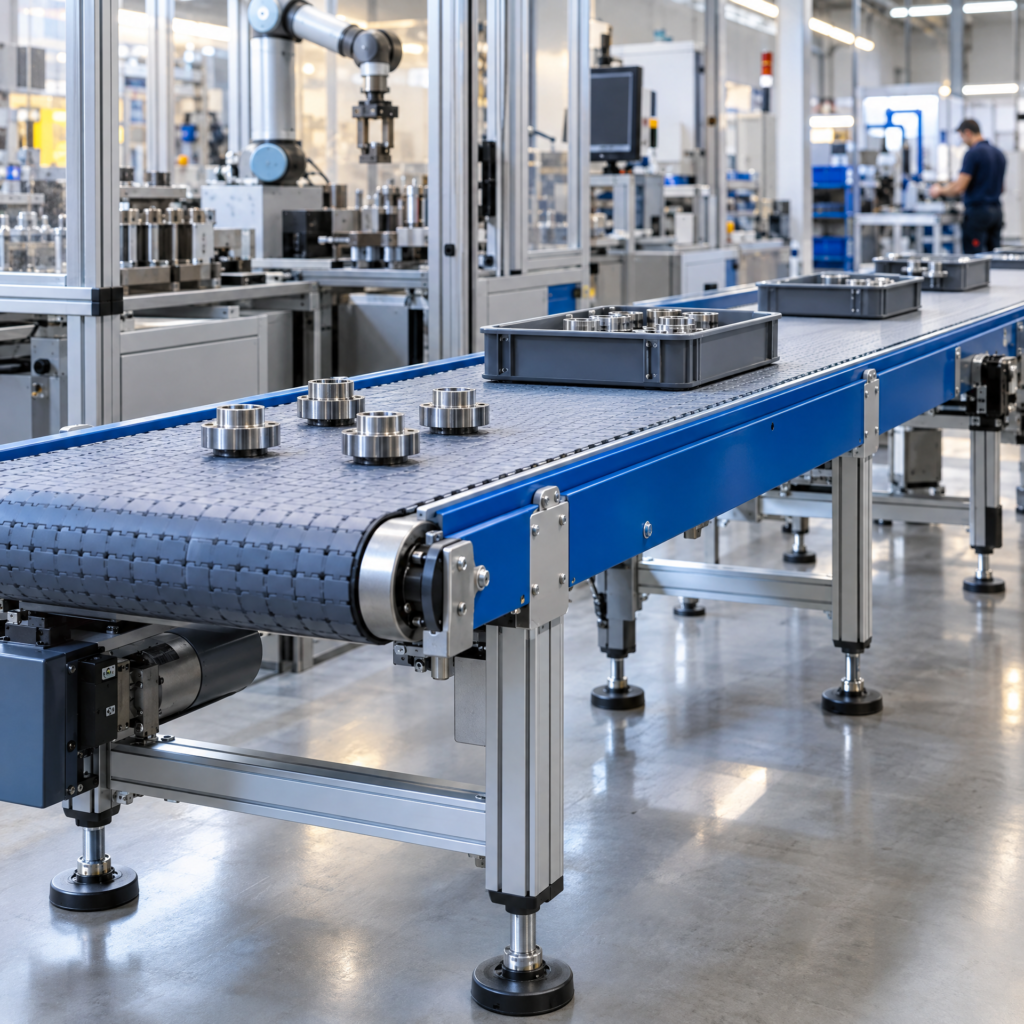
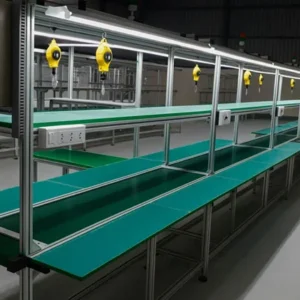
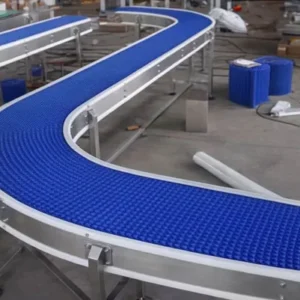
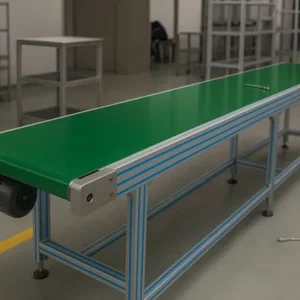
It depends on the product. Smooth PVC or PU belts and modular plastic belts are commonly used for packaging and food-handling lines, while rubber belts suit heavier or more abrasive loads. We recommend the belt after reviewing your product, speed and hygiene requirements.
What affects the cost of an industrial belt conveyor system?
The main factors are conveyor length and width, belt type, load and speed, incline, drive and control system, frame material, and the level of customisation. Because each system is built to your requirement, we quote after reviewing your application details.
Do you manufacture custom belt conveyors and provide installation support?
Yes. We design and manufacture belt conveyors to your layout and process, and support you with installation guidance and after-sales assistance. Contact us with your requirements to get a quote.