
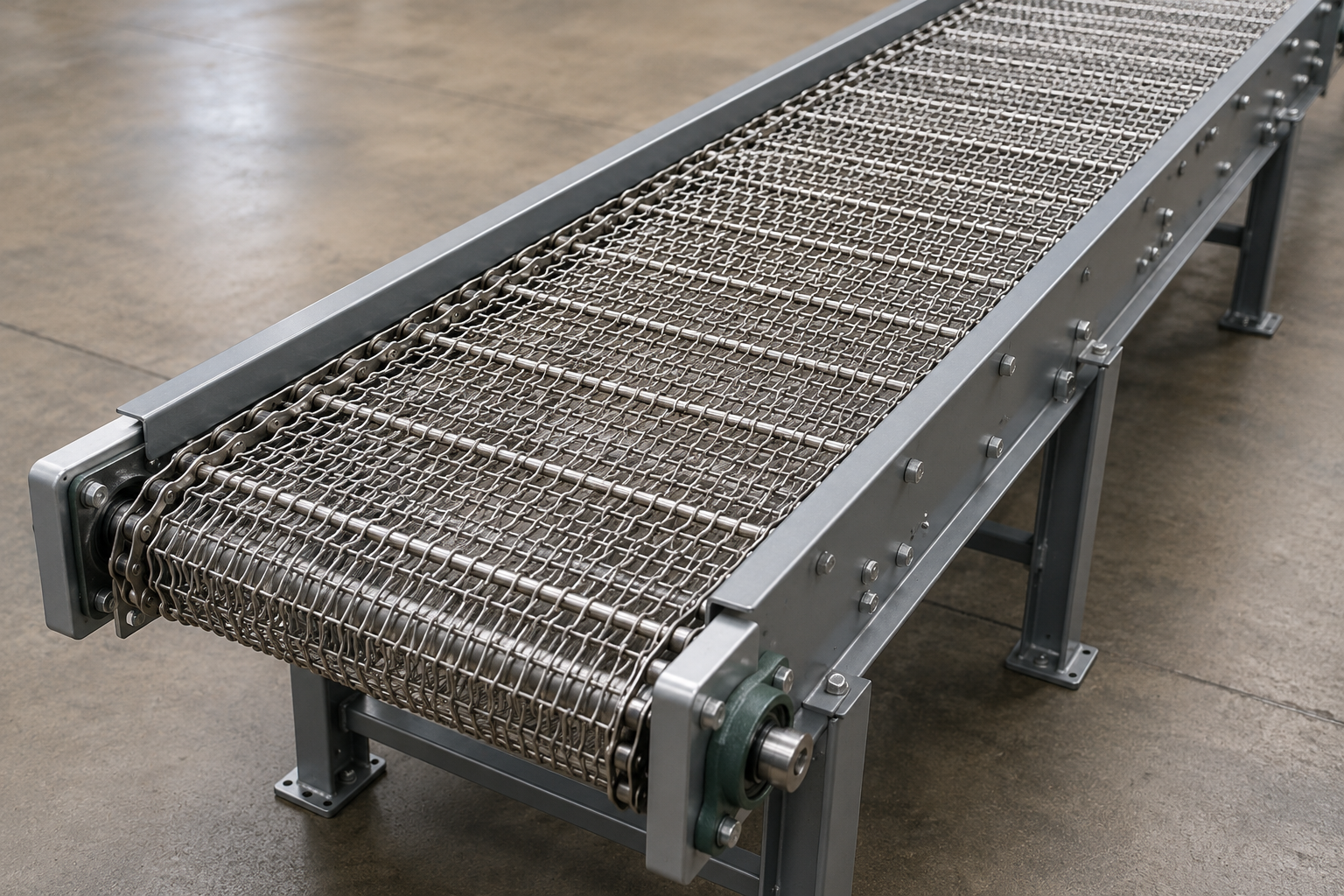
Wire mesh belt conveyor design plays a critical role in improving the reliability, durability, and efficiency of industrial material handling systems. In industries where continuous production is essential, unexpected equipment failures and frequent maintenance can result in significant financial losses and production delays. A well-engineered wire mesh conveyor system is designed to withstand demanding operating conditions, ensuring smoother operations and minimizing downtime.
Modern industries such as food processing, pharmaceuticals, automotive, metal processing, packaging, and manufacturing rely on advanced conveyor technologies to maintain uninterrupted workflows. A high-quality wire mesh belt conveyor offers excellent airflow, easy cleaning, and strong resistance to challenging operating environments, making it an ideal solution for applications requiring consistent performance.
Importance of Efficient Wire Mesh Belt Conveyor Design
The overall performance of a conveyor system depends greatly on its design and construction. A carefully developed wire mesh belt conveyor design ensures that materials move efficiently while reducing unnecessary stress on conveyor components.
Key design features that contribute to long-term performance include:
- Strong and durable wire mesh construction
- Proper belt tension and alignment
- Efficient load distribution
- Smooth product movement
- Resistance to heat, moisture, and corrosion
- Easy accessibility for cleaning and maintenance
These features help industries achieve reliable operations while reducing the chances of unexpected equipment failures.
How Wire Mesh Belt Conveyor Design Minimizes Maintenance Requirements
Frequent maintenance can interrupt production schedules and increase operating expenses. An advanced wire mesh belt conveyor design focuses on reducing wear and simplifying maintenance activities.
Improved Durability and Wear Resistance
Industrial conveyor systems are often exposed to continuous usage, heavy workloads, and challenging environmental conditions. High-quality wire mesh belts are designed to maintain their strength and structure over extended periods.
Their durable construction reduces damage caused by friction, heat, and regular operation, resulting in fewer repairs and longer service life.
Better Airflow and Cleaner Operations
One of the major advantages of wire mesh conveyors is their open structure. The mesh design allows proper airflow, making them suitable for cooling, drying, heating, and washing applications.
Better airflow reduces the accumulation of moisture, dust, and residues that can contribute to equipment wear and maintenance problems.
Easy Cleaning and Inspection
Regular cleaning is essential in industries that maintain strict hygiene standards. The open wire mesh structure provides easy access for cleaning and inspection, allowing maintenance teams to identify and address minor issues before they become serious problems.
This proactive approach reduces unexpected downtime and extends equipment lifespan.
Reducing Operational Downtime with Reliable Conveyor Performance
Downtime affects production output, delivery schedules, and overall profitability. A properly engineered wire mesh belt conveyor design supports continuous operations by improving system reliability.
The design helps reduce downtime through:
- Consistent material transportation
- Lower chances of belt failure
- Reduced component wear
- Simplified maintenance procedures
- Improved system stability
By maintaining smooth and uninterrupted material flow, businesses can achieve higher productivity and better operational efficiency.
The Role of Wire Mesh Belt Conveyor Manufacturers
Choosing experienced wire mesh belt conveyor manufacturers is essential for achieving reliable conveyor performance. Professional manufacturers understand different industrial requirements and provide customized solutions based on material type, operating environment, and production capacity.
Reliable manufacturers focus on:
- High-quality manufacturing standards
- Precision engineering
- Custom conveyor configurations
- Durable materials and components
- Technical support and maintenance guidance
Working with trusted manufacturers helps businesses implement conveyor systems that deliver long-term efficiency and reduced maintenance challenges.
Advanced Wire Mesh Conveyor Solutions
Industries looking for efficient and durable wire mesh conveyor systems can explore advanced solutions available at:
These systems are designed to provide smooth material transportation, excellent durability, and reliable performance across various industrial applications.
The right conveyor solution can significantly reduce manual intervention, improve productivity, and maintain continuous production processes.
Integration with Other Conveyor Technologies
Many industrial facilities use multiple conveyor systems to create a complete material handling network. Along with wire mesh conveyors, several other conveyor technologies support efficient operations.
Flat Belt Conveyor Systems
Flat belt conveyors are commonly used for moving products smoothly across production lines, packaging facilities, and warehouses.
Advantages include:
- Consistent product movement
- Simple design and operation
- Reduced handling time
- Improved production efficiency
Flat belt conveyors are suitable for transporting a wide range of materials with minimal operational interruptions.
Inclined Belt Conveyor Systems
When materials need to be transported between different heights, inclined belt conveyors provide an effective solution.
Benefits include:
- Better utilization of vertical space
- Reduced manual lifting
- Faster product transfer
- Improved workplace safety
These systems help streamline workflows while maintaining efficient material movement.
Troughed Belt Conveyor Systems
Industries handling bulk materials often use troughed conveyors for secure and continuous transportation.
Key benefits include:
- Reduced material spillage
- Efficient bulk handling
- Continuous operation
- Lower labor dependency
Combining different conveyor technologies helps industries create optimized and reliable production environments.
Enhancing Productivity Through Preventive Maintenance
Even with a high-quality conveyor system, preventive maintenance remains essential for maintaining maximum performance.
Recommended maintenance practices include:
- Inspecting the belt for signs of wear
- Checking alignment and tension
- Cleaning the conveyor regularly
- Monitoring moving components
- Replacing worn parts when required
A well-maintained conveyor system experiences fewer breakdowns and delivers consistent performance over time.
Future Trends in Wire Mesh Belt Conveyor Technology
The material handling industry is continuously evolving with new technologies focused on improving efficiency and reducing maintenance needs.
Modern wire mesh belt conveyor design innovations include:
- Improved corrosion-resistant materials
- Advanced belt structures
- Energy-efficient drive systems
- Automated monitoring solutions
- Smart maintenance technologies
These advancements help industries achieve greater reliability and reduce unplanned downtime.
Conclusion
A high-performance wire mesh belt conveyor design is essential for industries seeking reliable material handling, lower maintenance costs, and uninterrupted production. Through durable construction, efficient airflow, easy cleaning, and optimized engineering, wire mesh conveyors help businesses minimize operational downtime and improve productivity.
Partnering with experienced wire mesh belt conveyor manufacturers ensures access to customized, high-quality conveyor solutions designed to meet specific industrial requirements. When integrated with flat belt, inclined belt, and troughed belt conveyor systems, wire mesh conveyors contribute to a complete and efficient material handling process.
Investing in advanced conveyor technology helps businesses achieve long-term operational stability, reduced maintenance expenses, and improved overall efficiency.
Frequently Asked Questions
What is a wire mesh belt conveyor design?
Wire mesh belt conveyor design refers to the engineering and structural arrangement of a conveyor system that uses a metal mesh belt to transport products efficiently in various industrial applications.
How does wire mesh belt conveyor design reduce maintenance?
It reduces maintenance by using durable materials, providing easy cleaning access, improving airflow, and minimizing wear on conveyor components.
Which industries use wire mesh belt conveyors?
Industries such as food processing, pharmaceuticals, automotive, metal processing, packaging, and manufacturing commonly use wire mesh belt conveyors.
Why is choosing professional wire mesh belt conveyor manufacturers important?
Experienced manufacturers provide high-quality, customized conveyor solutions that improve reliability, durability, and long-term operational performance.
Can wire mesh conveyors work with other conveyor systems?
Yes. Wire mesh conveyors can be integrated with flat belt conveyors, inclined belt conveyors, and troughed belt conveyors to create efficient material handling systems.
What are the advantages of wire mesh belt conveyors?
They offer excellent airflow, easy maintenance, durability, hygienic operation, and reliable performance in demanding industrial environments.
How can businesses increase the lifespan of wire mesh conveyors?
Regular cleaning, routine inspections, proper alignment, and timely maintenance help extend the lifespan and maintain efficient conveyor performance.