
In today’s highly competitive industrial environment, production efficiency is directly linked to business profitability. Manufacturers across industries are constantly looking for ways to improve operational performance, increase output, and reduce costly interruptions. One of the biggest challenges faced by factories and production facilities is unplanned production downtime.
Production downtime can disrupt operations, delay deliveries, increase labor costs, and affect customer satisfaction. To overcome these challenges, businesses are increasingly investing in automated conveyor technologies. This is where experienced assembly line conveyor manufacturers play a critical role.
Modern conveyor systems help industries maintain continuous material movement, streamline production processes, and reduce operational disruptions. By implementing efficient automation systems, businesses can improve workflow management and ensure smoother production cycles.
Reliable conveyor systems manufacturers provide advanced conveyor solutions designed to minimize downtime while maximizing productivity and operational safety.
Understanding Production Downtime in Industrial Operations
Production downtime refers to any period when manufacturing operations stop or slow down due to equipment failures, maintenance issues, material handling problems, or workflow inefficiencies.
Downtime can occur because of:
- Manual handling delays
- Equipment breakdowns
- Poor workflow design
- Material transportation inefficiencies
- Overloaded production lines
- Lack of automation
- Inconsistent product movement
Even short interruptions in production can lead to major financial losses for industries operating on high-volume production schedules.
This is why businesses are turning to experienced assembly line conveyor manufacturers for automated material handling systems that improve operational continuity and reduce production delays.
Role of Assembly Line Conveyor Systems in Modern Manufacturing
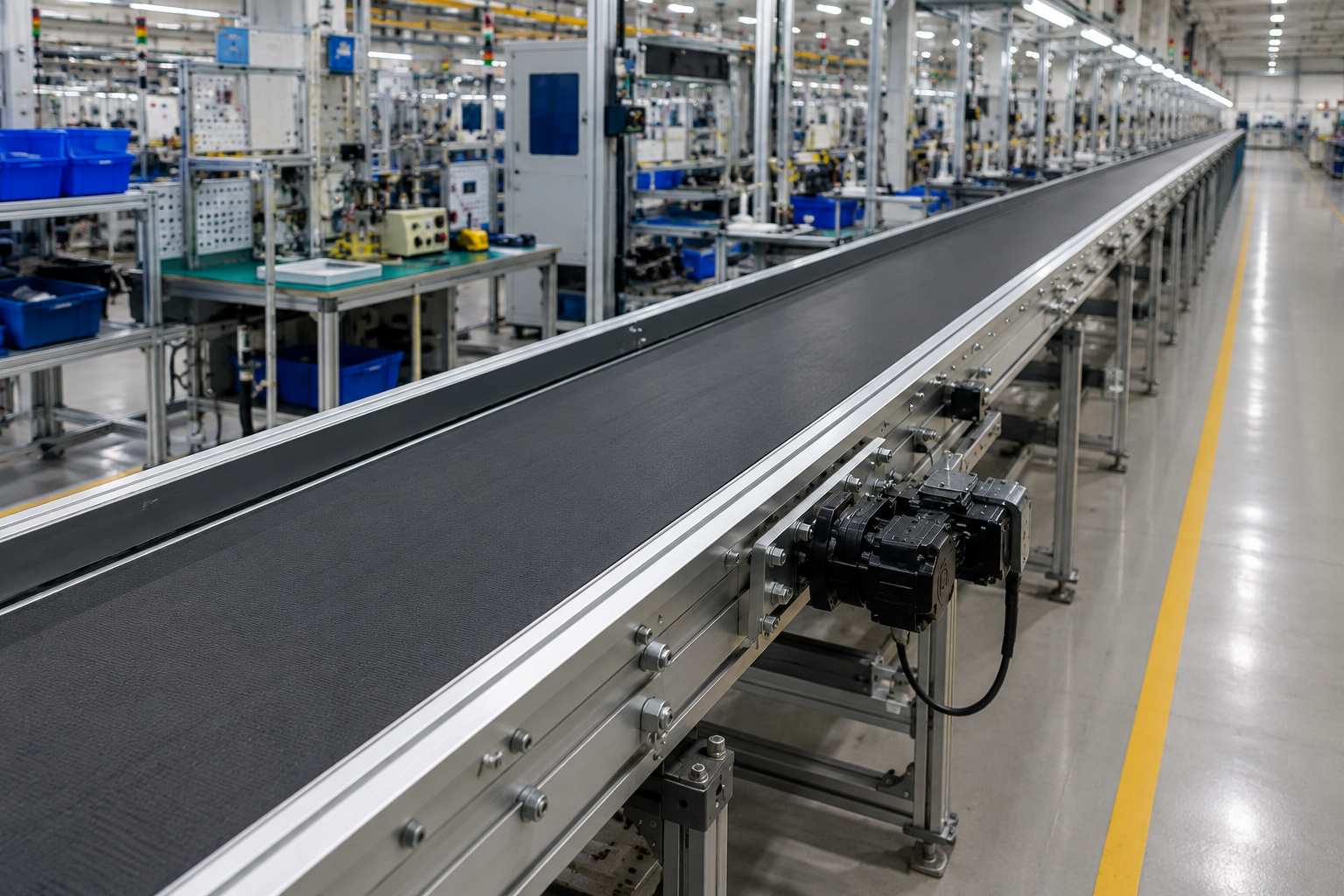
Assembly line conveyor systems are designed to move products and materials efficiently between different stages of production. These systems automate product transportation and eliminate unnecessary manual handling tasks.
Efficient conveyor systems help industries:
- Improve workflow efficiency
- Maintain continuous production
- Reduce labor dependency
- Increase production speed
- Minimize operational bottlenecks
- Improve workplace organization
- Enhance product handling accuracy
Modern automation technologies provided by trusted conveyor systems manufacturers allow businesses to achieve smoother operations and better production control.
How Assembly Line Conveyor Manufacturers Reduce Downtime
1. Streamlining Material Movement
One of the primary reasons for production delays is inconsistent material flow between production stages. Manual transportation methods often create bottlenecks and slow down operations.
Experienced assembly line conveyor manufacturers design systems that ensure continuous and smooth movement of materials throughout the facility. Automated conveyors reduce waiting time between processes and improve overall workflow efficiency.
By maintaining uninterrupted material transportation, businesses can significantly reduce production downtime.
2. Improving Workflow Automation
Automation is essential for modern manufacturing operations. Conveyor systems help automate repetitive tasks and reduce dependency on manual labor.
Efficient conveyor solutions allow products to move automatically between assembly stations, packaging areas, and loading zones. This reduces operational interruptions and improves production consistency.
Advanced conveyor systems provided by leading conveyor systems manufacturers also integrate with automated machinery, robotics, and quality inspection systems for seamless industrial automation.
3. Reducing Equipment Failures
Poorly designed or outdated material handling systems can lead to frequent equipment breakdowns and costly repairs.
Reliable assembly line conveyor manufacturers use durable components, advanced engineering techniques, and high-quality materials to ensure long-lasting performance. Properly designed conveyor systems require less maintenance and operate more efficiently under heavy workloads.
This helps industries reduce unplanned maintenance shutdowns and improve equipment reliability.
4. Enhancing Product Handling Accuracy
Manual handling increases the risk of product damage, misplacement, and operational errors. Damaged products often lead to production delays and financial losses.
Automated conveyor systems ensure accurate and controlled product movement throughout the production process. Proper product handling reduces waste, improves quality control, and minimizes operational disruptions.
Industries dealing with fragile, heavy, or high-volume products especially benefit from automated conveyor technologies.
Advanced Conveyor Solutions for Efficient Production Operations
Modern industrial facilities require specialized conveyor systems designed for different operational requirements. Experienced assembly line conveyor manufacturers offer a wide range of conveyor solutions that help businesses reduce downtime and improve production efficiency.
Assembly Line Belt Conveyor Systems
Efficient assembly line systems play a crucial role in maintaining smooth production flow. Assembly Line Belt Conveyor Solutions by Tech Trek Engineering are designed to improve product movement across manufacturing and assembly operations.
These systems support:
- Continuous material flow
- Faster assembly operations
- Reduced manual handling
- Improved workflow management
- Enhanced production efficiency
Automated assembly line conveyors help businesses maintain consistent production schedules and reduce operational delays.
Packing Conveyor Systems for Faster Packaging Operations
Packaging is one of the most critical stages in industrial production. Delays in packaging can slow down the entire production cycle.
Packing Conveyor Systems are designed to improve packaging line efficiency by automating product transportation between packaging stations.
Benefits include:
- Faster packaging processes
- Reduced labor requirements
- Improved product handling
- Better workflow organization
- Lower operational downtime
Packaging conveyors are widely used in FMCG, food processing, pharmaceutical, and logistics industries.
Z Belt Conveyor Systems for Vertical Material Movement
Many industrial facilities require vertical transportation of products between different production levels. Manual lifting processes can create delays and increase workplace risks.
Z Belt Conveyor Solutions provide efficient vertical material handling for industries seeking automated elevation solutions.
These systems help businesses:
- Optimize floor space utilization
- Improve production flow
- Reduce manual lifting tasks
- Enhance workplace safety
- Increase operational efficiency
Z belt conveyors are particularly useful in food processing, packaging, and warehousing industries.
Truck Loading Conveyor Systems for Faster Dispatch Operations
Loading and unloading operations often become major sources of production bottlenecks. Slow dispatch processes can delay deliveries and reduce operational efficiency.
Truck Loading Conveyor Systems help businesses automate loading operations and improve material movement during shipping and receiving activities.
Advantages include:
- Faster loading and unloading
- Reduced manual labor
- Improved dispatch efficiency
- Lower material handling risks
- Better logistics management
Automated loading systems help industries maintain smooth supply chain operations while minimizing downtime during dispatch activities.
Importance of Choosing the Right Conveyor Systems Manufacturers
Selecting the right conveyor systems manufacturers is essential for achieving long-term operational efficiency. A reliable manufacturer understands industry requirements and provides customized conveyor solutions tailored to specific production needs.
An experienced conveyor manufacturer offers:
- Custom conveyor system design
- High-quality engineering support
- Installation and integration services
- Preventive maintenance solutions
- Automation support
- Technical troubleshooting assistance
Industries that invest in quality conveyor systems experience fewer operational disruptions and better production consistency.
Role of Preventive Maintenance in Minimizing Downtime
Even the most advanced conveyor systems require regular maintenance to ensure smooth performance. Preventive maintenance helps identify potential issues before they cause production failures.
Professional assembly line conveyor manufacturers often provide maintenance support to help businesses maintain conveyor efficiency.
Preventive maintenance benefits include:
- Reduced equipment breakdowns
- Extended conveyor lifespan
- Improved operational reliability
- Lower repair costs
- Increased workplace safety
Regular inspections and servicing help industries maintain uninterrupted production operations.
Future of Conveyor Automation in Manufacturing
Industrial automation is rapidly evolving, and conveyor systems are becoming smarter and more efficient. Modern conveyor systems manufacturers are integrating advanced technologies into conveyor operations to improve performance and reduce downtime further.
Emerging trends include:
- IoT-enabled conveyor monitoring
- Predictive maintenance systems
- AI-based workflow optimization
- Energy-efficient conveyor motors
- Automated sorting and tracking systems
- Smart sensor integration
These innovations help businesses achieve higher productivity while reducing operational interruptions.
Conclusion
Minimizing production downtime is essential for maintaining profitability, operational efficiency, and customer satisfaction in today’s competitive industrial environment. Automated conveyor systems have become a critical part of modern manufacturing operations, helping businesses streamline workflows and improve material handling efficiency.
Experienced assembly line conveyor manufacturers provide advanced conveyor technologies that support continuous production, reduce manual handling challenges, and improve workplace organization. Reliable conveyor systems manufacturers help industries achieve long-term operational success through customized automation solutions.
From assembly line conveyors and packing systems to Z belt conveyors and truck loading conveyors, businesses can significantly improve production performance by investing in the right material handling technologies.
Companies like Tech Trek Engineering offer innovative conveyor solutions designed to meet the evolving needs of modern industries and support efficient, uninterrupted production operations.
Frequently Asked Questions
What are assembly line conveyor systems?
Assembly line conveyor systems are automated material handling systems designed to transport products and materials between different stages of production efficiently.
How do assembly line conveyor manufacturers help reduce downtime?
Experienced assembly line conveyor manufacturers design efficient systems that automate material movement, reduce manual handling, improve workflow efficiency, and minimize equipment failures.
Why are conveyor systems important in manufacturing?
Conveyor systems improve production speed, reduce operational delays, enhance workplace safety, and ensure smooth material handling throughout industrial operations.
What industries use assembly line conveyor systems?
Industries such as manufacturing, packaging, FMCG, logistics, food processing, warehousing, and automotive production commonly use conveyor systems.
What are the benefits of packing conveyor systems?
Packing conveyor systems improve packaging speed, reduce labor requirements, increase workflow efficiency, and minimize operational bottlenecks.
How do Z belt conveyors improve industrial operations?
Z belt conveyors help transport materials vertically, optimize floor space, reduce manual lifting tasks, and improve production workflow.
What is the purpose of truck loading conveyor systems?
Truck loading conveyor systems automate loading and unloading operations, helping industries improve dispatch efficiency and reduce material handling time.
Why is preventive maintenance important for conveyor systems?
Preventive maintenance helps reduce equipment failures, improve operational reliability, extend conveyor lifespan, and minimize production downtime.