
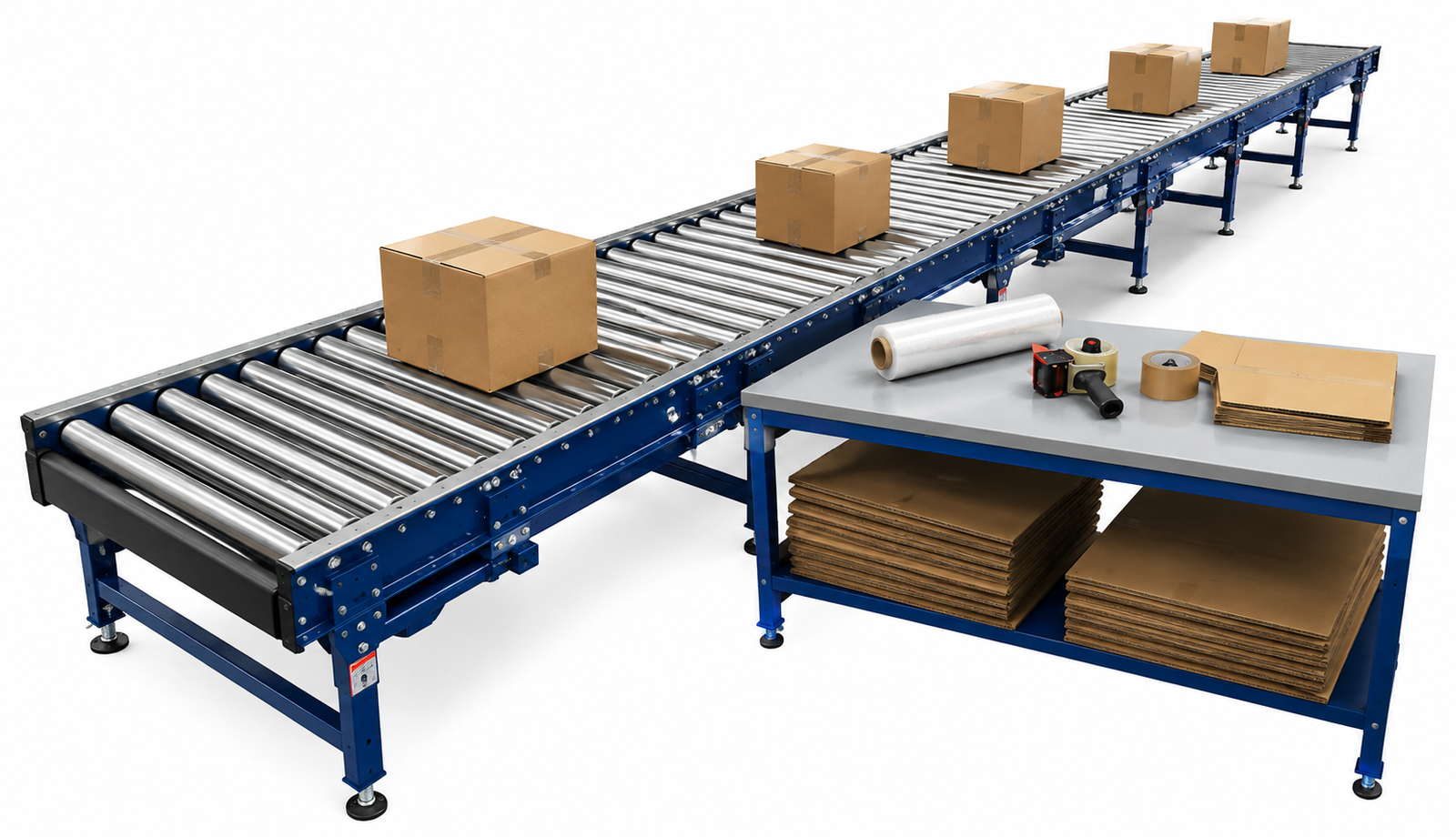
Packing conveyor systems help packaging facilities maintain a smooth and organized flow of products between different stages of the packing process. In busy manufacturing units, warehouses, and distribution centers, delays can occur when products are moved manually or when workstations are not properly connected. A well-designed conveyor system can reduce these interruptions by providing continuous and controlled product transportation.
From product preparation to sealing, labelling, inspection, and dispatch, efficient movement plays an important role in maintaining productivity. A packing conveyor can help businesses reduce unnecessary handling and create a more consistent workflow.
Improving Product Flow Between Packaging Stages
Packaging operations usually involve several connected activities. Products may need to move from production areas to packing stations and then continue toward sealing, labelling, inspection, and dispatch.
When products are transferred manually, delays can occur between these stages. Workers may need to carry cartons or packages from one workstation to another, creating unnecessary waiting time.
A packing conveyor provides a defined transportation route between work areas. Products can move continuously along the conveyor, helping ensure that the next stage receives materials when required.
Reducing Manual Material Movement
Manual transportation can become a major source of operational delays, particularly in high-volume packaging facilities. Employees may spend significant time lifting, carrying, and transferring products instead of focusing on packing and quality control activities.
A packing conveyor reduces repetitive transportation by automating the movement of products between designated points. This can help employees concentrate on important tasks such as:
- Product packing
- Quality inspection
- Labelling
- Order verification
- Equipment monitoring
- Dispatch preparation
By reducing unnecessary manual movement, businesses can improve workforce utilization and maintain a more productive workflow.
Helping Prevent Packaging Bottlenecks
A bottleneck occurs when one stage of the packaging process cannot keep up with the stages before or after it. Products may accumulate at certain workstations, leading to delays and congestion.
A properly configured packing conveyor helps regulate product movement between different stages. Conveyor speed and layout can be selected according to the requirements of the packaging line.
When products move at a controlled and consistent pace, businesses can reduce unnecessary accumulation and improve coordination between workstations.
Supporting Faster Order Processing
Packaging facilities often need to process a large number of products within a limited period. Delays in product movement can affect order completion and dispatch schedules.
A conveyor system helps create a continuous route from packing areas to sorting and dispatch sections. This can reduce the time required to transfer products manually and help maintain a more organized order fulfillment process.
For businesses handling increasing order volumes, efficient product movement can become an important part of maintaining customer service standards.
Creating a More Organized Packaging Area
Busy packaging facilities can become difficult to manage when products are placed temporarily on floors, tables, or other surfaces while waiting to be moved.
A packing conveyor creates a dedicated route for product transportation. This can help keep work areas more organized and make it easier for employees to understand the direction of product flow.
An organized layout can also make it easier to identify delays and improve coordination between different packaging activities.
Supporting Packaging Automation
Many businesses are introducing automation to improve packaging efficiency. A conveyor can serve as an important connection between automated and manual packaging equipment.
For example, products can move from a production machine to a packing station and then toward labelling or inspection equipment. A packing conveyor helps connect these stages and reduces the need for repeated manual transfers.
This makes it easier to build a more integrated packaging workflow as operational requirements grow.
Adapting to Different Product Requirements
Packaging facilities handle different types of products, including cartons, boxes, containers, packages, and other items. Conveyor selection should therefore be based on the specific application.
Important factors include:
- Product size and weight
- Required conveying speed
- Packaging capacity
- Available floor space
- Loading and discharge points
- Operating environment
- Integration with existing equipment
Selecting the right configuration helps ensure smooth and reliable product movement.
Businesses can explore Tech Trek Engineering’s Packing Belt Conveyor for material handling applications designed to support packaging workflows.
Reducing Operational Downtime
A reliable conveyor can help reduce delays caused by inefficient product transportation. However, regular maintenance remains essential for consistent performance.
Belts, rollers, bearings, drive components, and supporting structures should be inspected periodically. Early identification of wear or alignment problems can help prevent unexpected interruptions.
Preventive maintenance supports dependable operation and helps packaging facilities avoid unnecessary downtime.
Supporting Long-Term Productivity
The benefits of a conveyor system extend beyond immediate improvements in transportation speed. By creating a structured material flow, businesses can improve workforce utilization, reduce unnecessary movement, and make better use of available space.
As packaging volumes increase, a properly designed conveyor system can also support future expansion and automation goals.
Conclusion
Packing conveyor systems can play an important role in reducing operational delays within modern packaging facilities. By supporting continuous product movement, reducing repetitive manual handling, preventing bottlenecks, and connecting different packaging stages, they help businesses create a faster and more organized workflow.
Selecting the right conveyor configuration based on product characteristics, capacity requirements, and facility layout is essential for achieving reliable results. With proper installation and regular maintenance, a packing conveyor can provide long-term support for efficient packaging and dispatch operations.
Frequently Asked Questions
1. What is a packing conveyor used for?
A packing conveyor is used to transport products, cartons, boxes, and packages between different stages of packaging, inspection, sorting, and dispatch operations.
2. How does a packing conveyor reduce operational delays?
It provides a continuous transportation route between workstations, reducing the time employees spend manually carrying products and helping prevent workflow bottlenecks.
3. Can a packing conveyor support automated packaging lines?
Yes. A packing conveyor can connect different machines and workstations, helping create a more integrated automated or semi-automated packaging process.
4. What industries can use packing conveyors?
Packing conveyors can be used in manufacturing, warehousing, logistics, e-commerce, food processing, consumer goods, and other industries with packaging requirements.
5. How should businesses select a packing conveyor?
Businesses should consider product size, weight, required capacity, conveyor speed, available space, facility layout, and integration requirements before selecting a system.
6. Does a packing conveyor require regular maintenance?
Yes. Regular inspection of belts, rollers, bearings, and drive components can help maintain reliable performance and reduce unexpected operational downtime.