
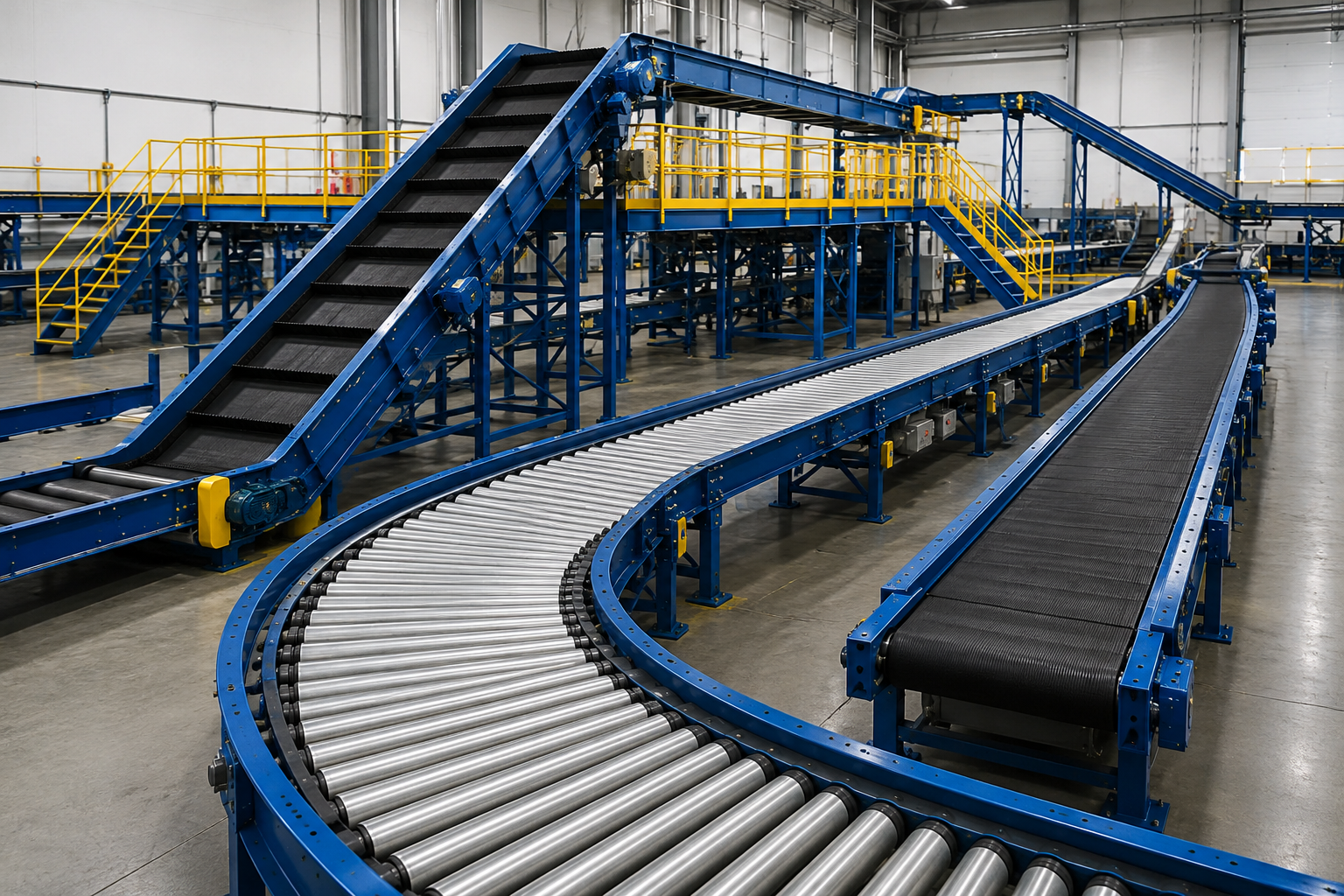
Aaluminium conveyor systems can provide a lightweight, flexible, and practical solution for industries that need efficient product transportation across workstations, assembly lines, packing areas, and inspection stations. However, every production facility has different requirements. A standard conveyor may not always match the available space, product dimensions, operating speed, or workflow. This is why customized aluminium conveyor systems are important for modern industrial operations.
Aluminium belt conveyors are particularly suited to light- and medium-duty applications where flexibility, clean construction, easy installation, and modularity are important considerations.
What Makes an Aaluminium Conveyor Different?
An aluminium belt conveyor uses aluminium profiles as its main structural frame, with a continuous belt used to transport products from one point to another. Compared with heavier structural materials, aluminium profiles provide a lightweight framework that can be easier to install, relocate, and modify.
The design can be adapted for applications such as assembly lines, packing operations, electronics manufacturing, pharmaceutical facilities, FMCG handling, inspection stations, and clean environments.
Why Customization Matters
Industrial facilities rarely have identical layouts or production requirements. A conveyor designed for one facility may not be suitable for another without modifications.
Customization allows businesses to specify important aspects of the system according to their application. These can include:
- Conveyor length and width
- Working height
- Belt material
- Operating speed
- Side guides and rails
- Workstations and accessories
- Drive configuration
- Integration with existing conveyors
These options can help the conveyor fit more effectively into the production process instead of requiring the facility to adapt its workflow around a fixed conveyor design.
Better Use of Available Production Space
Floor space is an important consideration in manufacturing facilities. Machinery, workstations, storage areas, and other equipment need to operate within a defined space.
A customized aluminium conveyor can be designed around the existing layout. Its length, width, height, and configuration can be selected according to the available area.
The modular nature of aluminium profiles can also make future modifications easier. If a production line is expanded or rearranged, the conveyor can potentially be adjusted or extended rather than completely replaced.
Matching the Conveyor to the Product
Different products require different conveying conditions. Small components, cartons, boxes, packaged products, and electronic components may have different requirements for belt surface, width, speed, and support.
For example, PVC and PU belts can be considered for different applications, while options such as anti-static, oil-resistant, and rough-top belts may be selected according to operating conditions. A food-grade PU belt can also be used where suitable hygienic handling is required.
Selecting the appropriate belt is therefore an important part of customization.
Improving Production Line Flexibility
Production requirements can change over time. A company may introduce new products, change workstation positions, increase production volumes, or modify its packaging process.
A modular aluminium conveyor can provide greater flexibility for these changes. Adjustable working heights, side guides, variable-speed control, and integration with existing conveyor systems are among the customization possibilities available for aluminium belt conveyors.
This flexibility can be particularly useful for facilities where production layouts are regularly updated.
Supporting Controlled Material Movement
Customized conveyors can help establish a consistent route for moving products between different stages of an operation. Instead of relying heavily on manual transportation, products can be transferred continuously from one workstation to another.
Variable-speed operation can also be useful when the conveyor needs to work alongside other production equipment. Depending on the system design, speed can be controlled using a VFD or PLC-based system.
Suitable for Clean and Professional Environments
Aluminium conveyor structures can be useful in environments where cleanliness and appearance are important. The aluminium frame is corrosion-resistant and provides a clean, modern appearance.
This makes aluminium belt conveyors suitable for applications such as electronics, pharmaceutical, FMCG, inspection, laboratory, and other controlled production environments, subject to the specific requirements of the facility.
Considering Long-Term Requirements
When selecting a customized conveyor, businesses should consider more than their immediate requirements. Product dimensions, expected production growth, operating speed, maintenance access, future layout changes, and integration with other equipment should all be evaluated.
Planning these factors in advance can make it easier to develop a conveyor system that remains useful as the production process evolves.
Conclusion
Customized Aaluminium conveyor systems can provide industries with a flexible approach to product transportation. By adjusting dimensions, belt types, working height, speed controls, guides, and other components, businesses can create a conveyor that fits their specific production requirements.
The lightweight and modular construction of aluminium belt conveyors also makes them suitable for applications where easy installation, reconfiguration, clean operation, and flexibility are important. Tech Trek Engineering offers customizable aluminium belt conveyor solutions designed around application and layout requirements.
Businesses interested in exploring available configurations can learn more about the Aluminium Belt Conveyor and evaluate which specifications may suit their industrial operation.
Frequently Asked Questions
1. What is an Aaluminium conveyor?
An Aaluminium conveyor is a belt conveyor that uses aluminium profiles as its main structural frame. It is commonly used for light- to medium-duty product transportation and can be customized for different industrial applications.
2. Why should an aluminium conveyor be customized?
Customization allows the conveyor to match the facility’s available space, product dimensions, required capacity, operating speed, working height, and production workflow.
3. What industries use aluminium belt conveyors?
Aluminium belt conveyors can be used in assembly, packaging, electronics, pharmaceutical, FMCG, inspection, laboratory, and other product-handling applications.
4. Can an aluminium conveyor be modified later?
Yes. Modular aluminium profile construction can allow the conveyor to be modified or expanded when production requirements or layouts change.
5. What belt options are available?
Depending on the application, options can include PVC flat belts, PU flat belts, food-grade PU belts, anti-static belts, oil-resistant belts, and rough-top belts.
6. Can conveyor speed be adjusted?
Yes. Variable-speed control can be provided using systems such as VFD or PLC-based controls, depending on the application and conveyor configuration.