
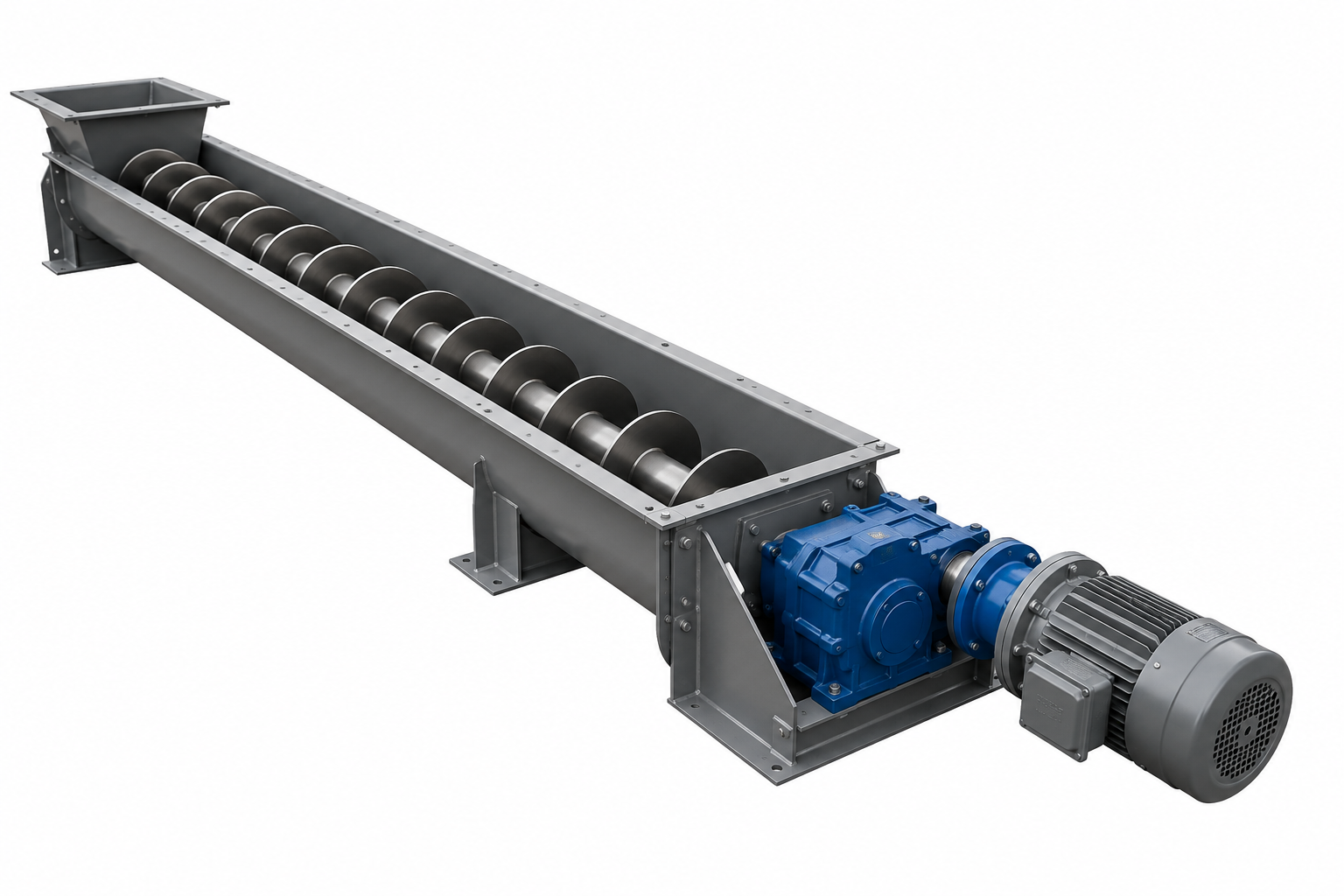
Screw Conveyor systems have become one of the most dependable solutions for heavy-duty material handling across a wide range of industries. Whether transporting powders, granules, cement, chemicals, grains, minerals, or other bulk materials, a screw conveyor provides a reliable, efficient, and enclosed method of moving materials from one processing stage to another. As industries continue to automate their operations and increase production capacity, investing in a high-quality screw conveyor helps improve productivity, reduce manual handling, and ensure a consistent material flow.
Heavy-duty industrial applications demand equipment that can withstand continuous operation while maintaining performance. A well-designed screw conveyor offers the durability and efficiency required to meet these demanding operational requirements.
What Is a Screw Conveyor?
A screw conveyor is a mechanical conveying system that uses a rotating helical screw blade, commonly called a flight, inside a tube or trough to move bulk materials. The rotating screw pushes materials forward, allowing them to be transported horizontally, vertically, or at an incline depending on the application.
Its simple yet effective design makes it suitable for handling a wide variety of free-flowing and semi-free-flowing materials while minimising product loss during transportation.
Designed for Heavy-Duty Industrial Applications
Heavy industries require conveying equipment capable of handling large volumes of materials under demanding conditions. A screw conveyor is specifically engineered for these environments, offering dependable performance even when transporting abrasive, dense, or heavy bulk materials.
Industries commonly using screw conveyors include:
- Cement manufacturing
- Mining and minerals
- Chemical processing
- Food processing
- Agriculture
- Power plants
- Steel industries
- Waste management
- Construction material handling
Its robust construction ensures reliable operation even during continuous production cycles.
Improving Material Handling Efficiency
Efficient material movement directly impacts production speed and operational performance. Manual transportation of bulk materials often slows production and increases labour requirements.
A Screw Conveyor automates material transfer between storage units, processing equipment, mixing stations, packaging lines, and loading areas. Continuous transportation eliminates unnecessary delays while ensuring materials reach the correct destination safely.
Major efficiency benefits include:
- Continuous material flow
- Faster bulk material transportation
- Reduced handling time
- Improved production efficiency
- Better workflow coordination
These advantages help businesses maximise production while maintaining consistent operational performance.
Reducing Material Loss
Material spillage and contamination can lead to unnecessary waste and increased production costs.
Because a screw conveyor transports materials inside an enclosed trough or tube, it helps minimise product loss and protects materials from external contaminants. This enclosed design is especially valuable when handling powders, chemicals, food ingredients, or fine granular materials.
Reduced spillage also keeps production areas cleaner and lowers housekeeping requirements.
Lower Labour Costs
Manual handling of heavy materials requires considerable time and workforce resources. Automating repetitive transportation tasks with a screw conveyor allows businesses to improve efficiency while reducing dependence on manual labour.
Some of the long-term cost advantages include:
- Reduced labour expenses
- Higher workforce productivity
- Lower employee fatigue
- Improved resource utilisation
- Increased operational efficiency
Employees can focus on higher-value activities instead of repetitive material transportation.
Supporting Industrial Automation
Modern manufacturing increasingly depends on automation to improve productivity and accuracy.
A Screw Conveyor integrates easily with automated production systems, including:
- Mixing equipment
- Processing machines
- Packaging lines
- Storage silos
- Feed hoppers
- Batch processing systems
This seamless integration creates a continuous workflow that reduces bottlenecks and improves overall plant efficiency.
Durable and Low Maintenance
One of the reasons businesses trust screw conveyors is their simple and durable construction.
Manufactured using robust industrial materials, these conveyors are designed to withstand demanding operating conditions while requiring relatively low maintenance. With regular inspections and preventive servicing, businesses can minimise downtime and extend equipment life.
The result is improved reliability and lower long-term operating costs.
Flexible for Different Materials
Another advantage of a screw conveyor is its ability to handle a wide variety of materials.
Common applications include:
- Cement
- Fly ash
- Sand
- Grain
- Fertilisers
- Plastic granules
- Food powders
- Chemical powders
- Mineral ores
- Industrial waste
Its versatility makes it an excellent solution for businesses operating across multiple industrial sectors.
Why Choose the Right Screw Conveyor Supplier?
Selecting the right conveyor system is just as important as selecting the right manufacturer. Factors such as material characteristics, conveying distance, capacity requirements, and plant layout should all be considered before installation.
Businesses looking for reliable and customised conveyor solutions can explore:
The screw conveyor solutions are designed for durability, efficiency, and long-term industrial performance, making them suitable for a broad range of heavy-duty material handling applications.
Long-Term Value for Businesses
Investing in a high-quality screw conveyor provides long-term operational benefits beyond material transportation. Businesses experience improved productivity, lower maintenance costs, safer working conditions, and greater production consistency.
As manufacturing demands continue to grow, dependable conveying equipment becomes an essential part of maintaining efficient industrial operations.
Conclusion
Screw Conveyor systems are trusted by businesses because they provide an efficient, durable, and cost-effective solution for heavy-duty material handling. Their enclosed design reduces material loss, supports continuous production, improves workplace safety, and integrates seamlessly with automated manufacturing processes.
Whether used in cement plants, food processing facilities, chemical industries, mining operations, or manufacturing units, a screw conveyor delivers reliable performance and long-term value. Choosing a high-quality conveyor system helps businesses optimise material handling, reduce operating costs, and support sustainable industrial growth.
Frequently Asked Questions
1. What is a screw conveyor used for?
A screw conveyor is used to transport bulk materials such as powders, granules, grains, cement, chemicals, minerals, and other industrial materials efficiently.
2. Which industries commonly use screw conveyors?
Screw conveyors are widely used in cement, mining, food processing, agriculture, pharmaceuticals, chemicals, construction, power generation, and manufacturing industries.
3. What are the advantages of a screw conveyor?
Key advantages include continuous material flow, reduced labour costs, enclosed material transport, low maintenance, improved productivity, and efficient bulk material handling.
4. Can a screw conveyor handle heavy materials?
Yes. Screw conveyors are designed to transport heavy and abrasive bulk materials while maintaining reliable performance in demanding industrial environments.
5. Does a screw conveyor support industrial automation?
Yes. Screw conveyors integrate easily with automated production lines, mixers, packaging systems, storage silos, and processing equipment.
6. How does a screw conveyor improve workplace safety?
It reduces manual material handling, minimises product spillage, keeps work areas cleaner, and lowers the risk of workplace injuries.
7. Why should businesses invest in a quality screw conveyor?
A quality screw conveyor improves operational efficiency, reduces maintenance costs, supports continuous production, and provides long-term value through reliable material handling performance.