
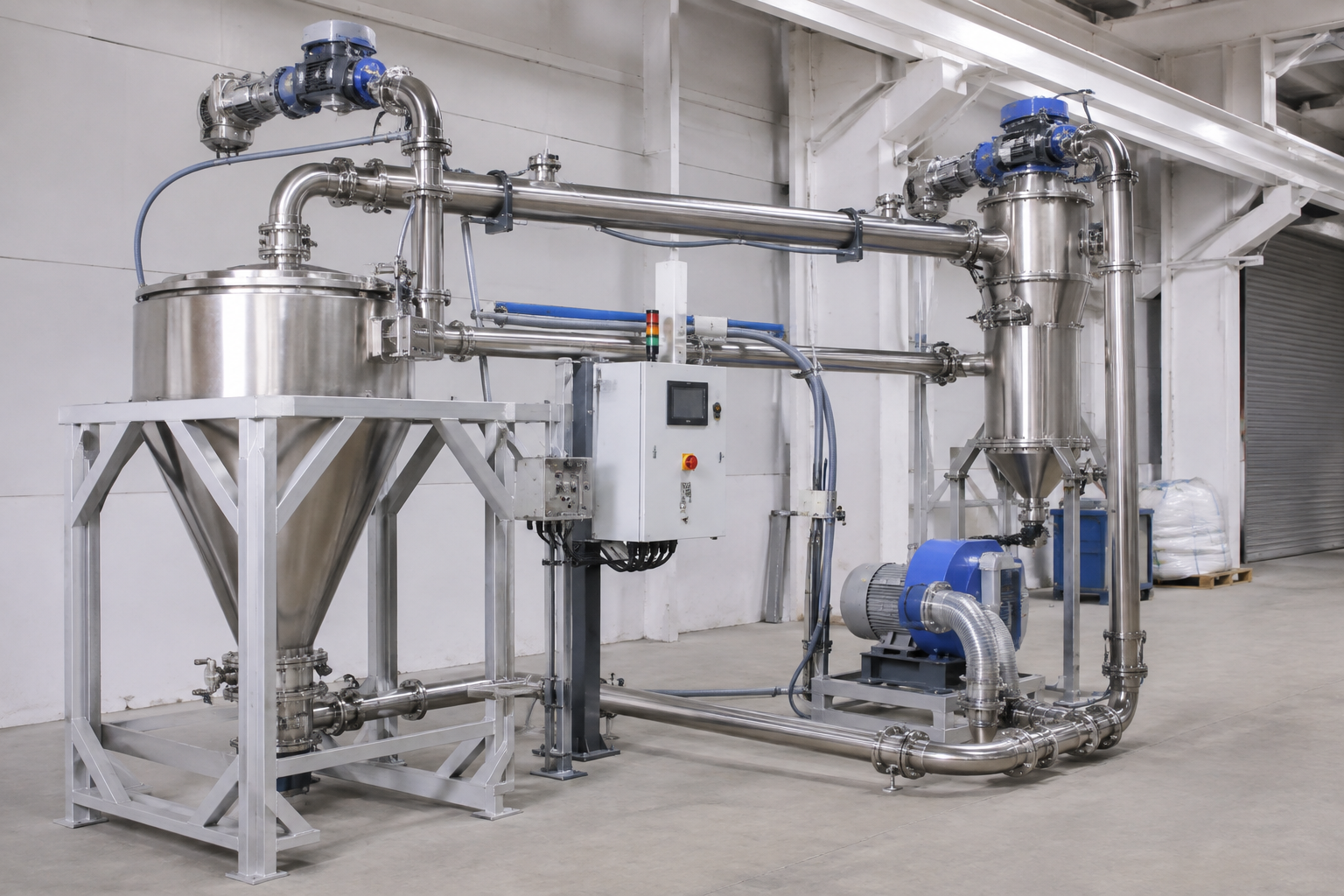
Pneumatic Conveyor systems are helping industries improve material handling efficiency while supporting cleaner, safer, and more sustainable production operations. As businesses look for ways to reduce material waste, optimize energy use, minimize manual handling, and improve workplace conditions, pneumatic conveying technology offers a practical solution for transporting powders, granules, and other bulk materials through enclosed pipelines.
Unlike conventional open material handling methods, pneumatic conveying moves materials using controlled airflow. This enclosed approach can help businesses maintain cleaner production environments while reducing material loss during transportation. With the right system design and operating conditions, a pneumatic conveyor can become an important part of a modern and resource-efficient material handling strategy.
What Is a Pneumatic Conveyor?
A pneumatic conveyor is a material handling system that transports bulk materials through pipelines using air or another gas as the conveying medium. Depending on the application, materials can be moved over different distances and through various routes without requiring extensive floor-level conveyor infrastructure.
These systems are commonly used for transporting:
- Powders
- Granules
- Fine particles
- Plastic pellets
- Food ingredients
- Chemical materials
- Pharmaceutical products
- Dry bulk materials
The enclosed transportation process makes pneumatic conveying particularly useful for industries where cleanliness, product protection, and controlled material movement are important.
Reducing Material Loss and Waste
Material waste can significantly affect industrial operating costs and resource consumption. Spillage during manual transportation or open conveying processes can result in product loss and additional cleanup requirements.
A Pneumatic Conveyor moves materials through enclosed pipelines, helping reduce exposure to the surrounding environment and limiting the possibility of material spillage during transportation.
This can be particularly beneficial when handling valuable powders, fine particles, or products that need to remain contained throughout the production process.
By reducing material loss, businesses can make better use of their raw materials and improve overall process efficiency.
Supporting Cleaner Production Environments
Sustainable manufacturing also involves maintaining cleaner production facilities. Dust and airborne particles generated during bulk material movement can create housekeeping challenges and affect workplace conditions.
Because pneumatic conveying takes place within an enclosed pipeline, it can help limit the release of materials into the surrounding workspace.
This provides several operational benefits:
- Reduced material spillage
- Cleaner production areas
- Lower housekeeping requirements
- Better material containment
- Improved workplace organization
For industries handling powders and fine materials, enclosed conveying can be especially valuable.
Optimizing Material Handling Resources
Efficient resource utilization is an important part of sustainable industrial operations. Businesses need to move materials without unnecessary transportation steps, excessive manual effort, or inefficient use of production space.
A Pneumatic Conveyor can transport materials through flexible pipeline routes, allowing businesses to connect storage, processing, mixing, and packaging areas more efficiently.
This flexibility can help facilities design material handling routes according to their existing layout instead of relying solely on large floor-mounted equipment.
Reducing Manual Material Handling
Sustainability is not limited to environmental considerations. Efficient use of human resources and improved working conditions are also important aspects of modern industrial operations.
Manual transportation of powders and bulk materials can be repetitive and physically demanding. Pneumatic conveying automates the movement of materials, allowing employees to focus on monitoring, quality control, equipment operation, and other higher-value activities.
Reduced manual handling can contribute to:
- Lower physical strain
- Improved workforce productivity
- Fewer repetitive handling tasks
- Better workflow organization
- More consistent material transportation
Automation therefore supports both operational efficiency and improved working conditions.
Improving Product Containment
Some industrial materials require careful handling because exposure to moisture, dust, contaminants, or the surrounding environment can affect product quality.
A pneumatic conveying system provides an enclosed transportation route, helping maintain better material containment during movement.
This is useful in industries such as food processing, pharmaceuticals, chemicals, and plastics, where product integrity can be an important production requirement.
By reducing unnecessary exposure during transportation, businesses can improve process control and reduce potential product losses.
Efficient Use of Factory Space
Industrial facilities often need to accommodate production machinery, storage areas, workers, and material handling equipment within limited space.
A Pneumatic Conveyor uses pipelines rather than extensive floor-level conveying structures. The pipelines can often be routed through different sections of a facility, helping businesses utilize available space more effectively.
Better space utilization can reduce congestion and provide greater flexibility when planning production layouts.
This becomes increasingly valuable for growing businesses that need to increase production capacity without making major changes to their facilities.
Supporting Industrial Automation
Automation is closely connected to sustainable manufacturing because it enables businesses to improve process consistency and reduce unnecessary resource use.
Pneumatic conveyors can be integrated with automated production equipment, storage systems, processing machines, weighing units, and packaging lines.
This creates a coordinated material handling process in which materials can be transferred automatically between different production stages.
Automation can help businesses achieve:
- More consistent material flow
- Reduced process delays
- Better production planning
- Lower manual intervention
- Improved operational control
As factories adopt smart manufacturing technologies, pneumatic conveying can become an important component of automated material handling systems.
Reducing Operational Downtime
Unexpected material handling problems can interrupt production and result in wasted time and resources. Reliable conveying equipment helps maintain a consistent supply of materials to different processing stages.
Proper system design, regular inspection, and preventive maintenance are essential for maintaining dependable performance.
Businesses should regularly inspect key components such as pipelines, blowers, filters, valves, and other system components. Preventive maintenance can help identify potential issues before they develop into major operational problems.
A well-maintained system can therefore support consistent production while reducing unnecessary downtime.
Choosing the Right Pneumatic Conveyor
Not every pneumatic conveying application has the same requirements. Material characteristics, conveying distance, capacity, particle size, moisture content, and production conditions should be considered before selecting a system.
Businesses should also evaluate factors such as:
- Required conveying capacity
- Material properties
- Pipeline configuration
- Operating pressure
- Distance between process points
- Maintenance requirements
- Facility layout
Choosing an appropriately designed system helps ensure efficient material movement and reliable long-term performance.
Businesses looking for pneumatic conveying solutions can explore:
Selecting a system based on actual operational requirements can help industries achieve better efficiency while supporting their long-term material handling goals.
Supporting Sustainable Industrial Growth
As industries continue to focus on sustainable production, businesses are looking beyond traditional methods to improve efficiency and reduce waste.
A Pneumatic Conveyor can contribute to these goals by providing enclosed material transportation, reducing spillage, minimizing manual handling, optimizing facility space, and supporting automated production processes.
However, sustainability also depends on how efficiently the system is designed and operated. Proper sizing, suitable operating conditions, regular maintenance, and responsible energy management are essential for achieving the best results.
Applications Across Industries
Pneumatic conveyors are suitable for a wide variety of industrial applications. Their enclosed design and flexible routing make them useful wherever dry bulk materials need to be transferred between processing stages.
Common applications include:
Food Processing
Pneumatic systems can transport ingredients and dry food products while supporting hygienic material handling practices.
Pharmaceutical Manufacturing
Controlled and enclosed material movement can help support clean production environments and protect sensitive materials.
Chemical Processing
Powders and granular chemicals can be transferred through enclosed pipelines, helping minimize spillage and exposure.
Plastic Manufacturing
Plastic pellets and granules can be transported between storage and processing equipment efficiently.
Cement and Construction Materials
Fine powders and other dry bulk materials can be transferred between different processing stages using suitable pneumatic conveying configurations.
Conclusion
Pneumatic Conveyor technology offers industries an efficient approach to sustainable material handling by combining enclosed transportation with automation, improved material containment, reduced manual handling, and better use of facility space. By minimizing material loss and supporting cleaner production environments, pneumatic conveying can contribute to more efficient industrial operations.
For businesses seeking to modernize their material handling processes, selecting the right pneumatic conveyor and maintaining it properly can provide long-term operational benefits. As industries continue to pursue cleaner, safer, and more resource-efficient manufacturing practices, pneumatic conveying systems are well positioned to support the next generation of sustainable material handling.
Frequently Asked Questions
1. What is a pneumatic conveyor used for?
A pneumatic conveyor is used to transport powders, granules, pellets, and other dry bulk materials through enclosed pipelines using controlled airflow.
2. How does a pneumatic conveyor support sustainable material handling?
It can reduce material spillage, improve product containment, reduce manual handling, optimize factory space, and support automated production processes.
3. Which industries use pneumatic conveyors?
Pneumatic conveyors are commonly used in food processing, pharmaceuticals, chemicals, plastics, cement, construction materials, agriculture, and other bulk material handling industries.
4. Can pneumatic conveyors reduce material waste?
Yes. Their enclosed conveying route helps minimize spillage and material exposure, which can reduce product loss during transportation.
5. Are pneumatic conveyors suitable for automated production?
Yes. Pneumatic conveying systems can be integrated with processing equipment, storage systems, weighing units, packaging machinery, and other automated production technologies.
6. What materials can a pneumatic conveyor transport?
Depending on the system design, pneumatic conveyors can transport powders, granules, plastic pellets, food ingredients, chemical materials, pharmaceutical products, and other dry bulk materials.
7. What factors should be considered when selecting a pneumatic conveyor?
Businesses should consider material characteristics, conveying capacity, distance, pipeline configuration, operating conditions, facility layout, and maintenance requirements before selecting a system.