
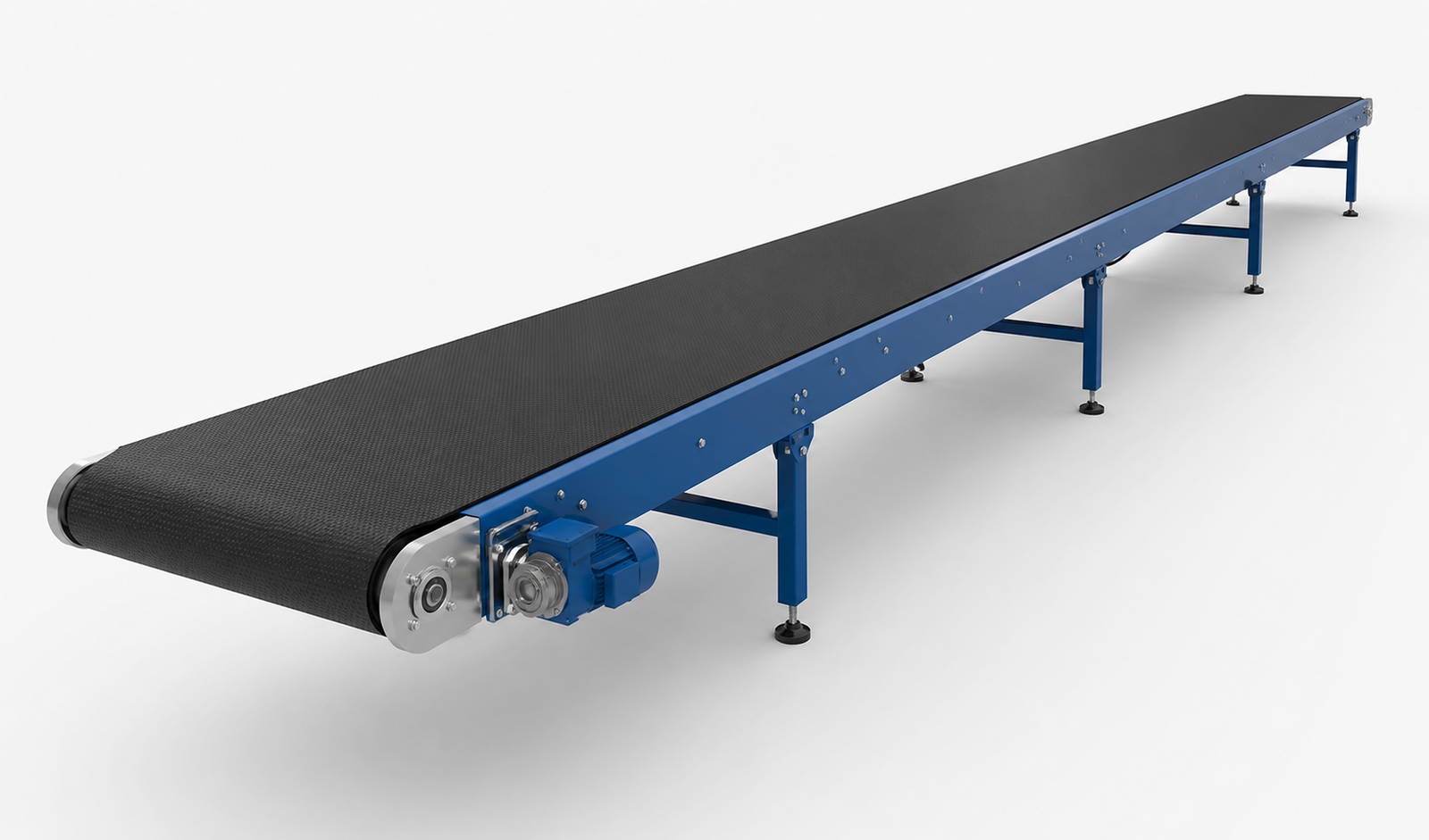
Today, flat belt conveyor manufacturers in Delhi and Madhya Pradesh are playing a pivotal role in reshaping how industries operate, scale, and compete. Industrial growth in India is closely tied to advancements in automation, material handling, and operational efficiency. Among the many technologies fueling this transformation, flat belt conveyors stand out as a critical component across sectors such as manufacturing, logistics, packaging, food processing, and warehousing.
These regions have emerged as key industrial hubs, attracting investments and fostering innovation in conveyor systems. With growing demand for efficient material handling solutions, businesses are increasingly turning to experienced flat belt conveyor manufacturers to enhance productivity and streamline operations.
The Rising Demand for Flat Belt Conveyors in Industrial Sectors
Flat belt conveyors are widely used due to their simplicity, flexibility, and efficiency. Industries rely on these systems for transporting goods smoothly over short to medium distances. As manufacturing and logistics sectors expand in Delhi and Madhya Pradesh, the need for reliable conveyor solutions has grown significantly.
Leading flat belt conveyor manufacturers understand these evolving requirements and are delivering systems that meet modern industry standards. From small-scale units to large production facilities, flat belt conveyors are being customized to suit diverse operational needs.
The increasing focus on automation has further accelerated the adoption of advanced conveyor systems. Companies are investing in innovative flat belt conveyor design to reduce manual labor, minimize errors, and improve throughput.
Strategic Importance of Delhi & Madhya Pradesh in Industrial Growth
Delhi, being a major commercial and industrial hub, offers excellent infrastructure, connectivity, and access to a vast market. Madhya Pradesh, on the other hand, is rapidly emerging as a manufacturing powerhouse due to its central location, favorable policies, and expanding industrial corridors.
Flat belt conveyor manufacturers in these regions benefit from:
- Proximity to key industries
- Strong supply chain networks
- Skilled workforce availability
- Government support for industrial development
This strategic advantage allows manufacturers to deliver high-quality conveyor systems efficiently and at competitive prices.
Innovation in Flat Belt Conveyor Design
One of the key factors driving industrial growth is continuous innovation in flat belt conveyor design. Modern industries require systems that are not only efficient but also adaptable and durable.
Leading flat belt conveyor manufacturers are focusing on:
- Modular designs for easy installation and expansion
- Energy-efficient systems to reduce operational costs
- Advanced materials for longer lifespan
- Integration with automation technologies
These innovations enable businesses to optimize workflows and improve overall productivity. Customization has also become a major trend, with manufacturers offering tailored solutions based on specific industry requirements.
Enhancing Productivity and Operational Efficiency
Efficiency is at the core of industrial success. Flat belt conveyors significantly improve material handling processes by ensuring smooth and continuous movement of goods.
Top flat belt conveyor manufacturers provide systems that:
- Reduce manual handling
- Increase production speed
- Minimize downtime
- Improve workplace safety
For example, industries that deal with bulk materials often complement flat belt systems with specialized solutions like troughed conveyors. Businesses looking for efficient bulk handling can explore advanced troughed belt conveyor solutions to enhance their operations.
By integrating such systems, industries can achieve seamless material flow and reduce operational bottlenecks.
Supporting Diverse Industrial Applications
The versatility of flat belt conveyors makes them suitable for a wide range of industries. Leading flat belt conveyor manufacturers cater to sectors such as:
- Automotive manufacturing
- FMCG and packaging
- Pharmaceuticals
- Food processing
- E-commerce and warehousing
Each industry has unique requirements, and manufacturers are addressing these through customized flat belt conveyor design. For instance, food processing units require hygienic conveyors, while logistics companies need high-speed systems for sorting and distribution.
Role in Assembly Line Optimization
Assembly lines are the backbone of manufacturing industries. Efficient material movement is essential for maintaining production flow and meeting deadlines.
Top flat belt conveyor manufacturers are developing systems that integrate seamlessly into assembly lines, improving coordination and efficiency. Businesses can also benefit from specialized assembly line conveyor systems that are designed to handle complex production processes.
These solutions help manufacturers:
- Streamline operations
- Reduce cycle time
- Improve product quality
- Enhance worker productivity
As a result, industries in Delhi and Madhya Pradesh are achieving higher output levels and better operational control.
Cost-Effective Solutions for Growing Industries
Cost efficiency is a major concern for businesses, especially in competitive markets. Flat belt conveyors offer an economical solution for material handling without compromising on performance.
Leading flat belt conveyor manufacturers focus on delivering:
- Affordable yet durable systems
- Low maintenance requirements
- Long-term reliability
With advancements in flat belt conveyor design, manufacturers are able to optimize material usage and reduce energy consumption. This helps businesses lower operational costs while maintaining high efficiency.
Driving Automation and Industry 4.0 Adoption
The shift towards Industry 4.0 is transforming how industries operate. Automation, data integration, and smart technologies are becoming essential for staying competitive.
Flat belt conveyor manufacturers in Delhi and Madhya Pradesh are at the forefront of this transformation. They are incorporating features such as:
- Sensor-based monitoring
- Automated controls
- IoT-enabled systems
- Real-time data tracking
These advancements allow businesses to monitor performance, detect issues early, and make data-driven decisions. The integration of smart conveyor systems is playing a crucial role in driving industrial growth.
Sustainability and Energy Efficiency
Sustainability is becoming a key focus for industries worldwide. Modern conveyor systems are being designed to minimize environmental impact while maximizing efficiency.
Leading flat belt conveyor manufacturers are adopting eco-friendly practices such as:
- Using energy-efficient motors
- Reducing material waste
- Designing systems for minimal power consumption
Innovative flat belt conveyor design also ensures optimal performance with lower energy usage. This not only benefits the environment but also helps businesses reduce operational costs.
Strengthening Supply Chain and Logistics
Efficient supply chain management is critical for industrial success. Flat belt conveyors play a vital role in ensuring smooth movement of goods within warehouses and distribution centers.
Top flat belt conveyor manufacturers are providing solutions that enhance logistics operations by:
- Improving sorting and handling processes
- Reducing delays and errors
- Increasing throughput
For industries dealing with bulk materials, advanced systems like troughed belt conveyor solutions further improve efficiency and reliability.
These innovations are helping businesses in Delhi and Madhya Pradesh build efficient supply chains.
Future Outlook for Conveyor Manufacturing Industry
The future of the conveyor manufacturing industry looks promising, with continuous advancements in technology and increasing demand for automation. Flat belt conveyor manufacturers are expected to play an even greater role in shaping industrial growth.
Key trends to watch include:
- Increased adoption of smart conveyor systems
- Greater emphasis on customization
- Integration with AI and machine learning
- Expansion into new industrial sectors
As industries continue to evolve, the demand for innovative flat belt conveyor design will only grow, creating new opportunities for manufacturers and businesses alike.
Conclusion
The contribution of flat belt conveyor manufacturers in Delhi and Madhya Pradesh to industrial growth cannot be overstated. By providing efficient, reliable, and innovative material handling solutions, they are enabling industries to scale operations, improve productivity, and stay competitive in a rapidly changing market.
From advanced flat belt conveyor design to integration with automation technologies, these manufacturers are driving transformation across multiple sectors. As industrial demand continues to rise, their role will remain crucial in shaping the future of manufacturing and logistics in India.
FAQs
1. What industries use flat belt conveyors?
Flat belt conveyors are used in industries such as manufacturing, packaging, food processing, pharmaceuticals, and logistics due to their versatility and efficiency.
2. Why are flat belt conveyor manufacturers important for industrial growth?
They provide essential material handling solutions that improve productivity, reduce manual labor, and support automation, making industries more efficient and competitive.
3. What is the importance of flat belt conveyor design?
A well-planned flat belt conveyor design ensures smooth operation, durability, energy efficiency, and customization based on specific industry requirements.
4. How do flat belt conveyors improve efficiency?
They enable continuous movement of materials, reduce handling time, minimize errors, and enhance overall workflow in industrial operations.
5. Are flat belt conveyors cost-effective?
Yes, they are cost-effective due to low maintenance requirements, energy efficiency, and long operational lifespan.
6. Can flat belt conveyors be customized?
Leading flat belt conveyor manufacturers offer customized solutions tailored to different industries and operational needs.
7. What role do conveyors play in automation?
Conveyors are a key component of automated systems, enabling seamless material flow and integration with advanced technologies like sensors and IoT.