
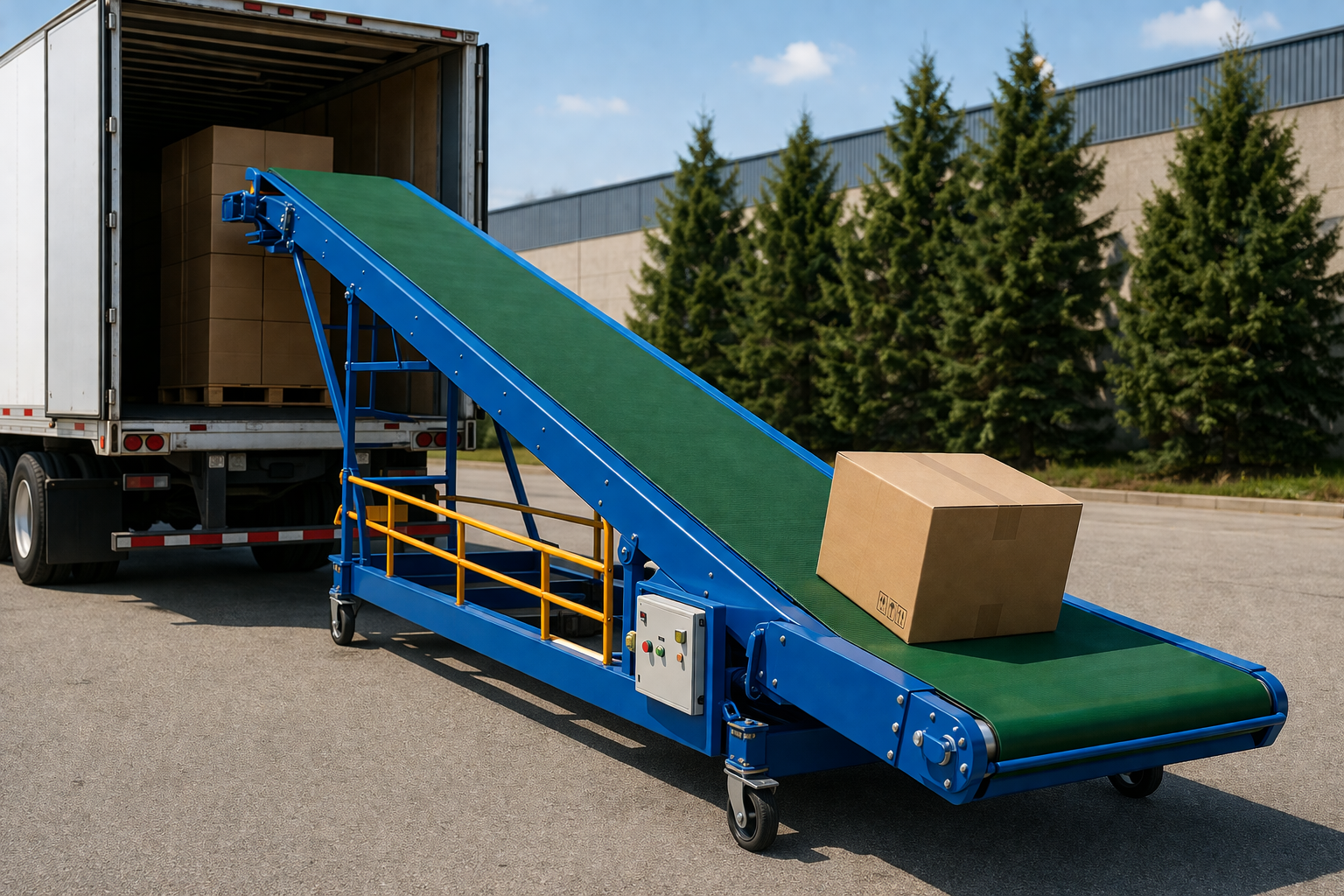
Truck loading conveyor systems are transforming the way industries handle bulk materials during loading and dispatch operations. In many warehouses, manufacturing facilities, distribution centres, and material-handling units, loading trucks manually requires considerable physical effort, multiple workers, and significant time. A conveyor-based loading solution can streamline this process by creating a continuous path for moving materials from the storage or processing area directly toward the truck.
As industrial operations increasingly focus on productivity and workplace efficiency, reducing unnecessary manual material movement has become an important objective. A properly designed truck loading conveyor can help businesses move materials more consistently while reducing dependence on intensive manual labour.
What Is a Truck Loading Conveyor?
A truck loading conveyor is a material-handling system designed to transport products, packages, bags, cartons, bulk materials, or other suitable loads toward or into a truck during loading operations.
Depending on the application, these conveyors can be designed with different lengths, belt widths, loading capacities, elevations, and configurations. Some systems can also be adjusted or extended to accommodate different truck sizes and loading positions.
The conveyor creates a controlled material flow between the loading point and the vehicle, reducing the need for workers to repeatedly carry or push materials across the loading area.
For businesses looking for a dedicated material-handling solution, a truck loading belt conveyor can be incorporated into the loading process according to operational and space requirements.
How Manual Truck Loading Creates Labour Challenges
Traditional truck loading often involves workers picking up materials from pallets, storage areas, or production lines and carrying them to the vehicle. When thousands of bags, boxes, packages, or other materials need to be loaded, this process can become physically demanding.
Manual loading may require several employees working simultaneously to maintain an acceptable loading speed. Workers may also need to walk repeatedly between the material source and truck, increasing the amount of time spent on non-value-adding movement.
Other challenges can include:
- Higher dependence on manual labour
- Longer loading times
- Physical fatigue among workers
- Inconsistent material movement
- Increased handling requirements
- Difficulty maintaining loading speed during peak periods
A conveyor system addresses many of these challenges by mechanising the transportation stage of the loading process.
Reducing the Need for Repetitive Material Handling
One of the biggest advantages of a truck loading conveyor is its ability to reduce repetitive carrying activities.
Instead of workers physically transporting each item from one location to another, the conveyor performs the horizontal or inclined movement. Workers can focus primarily on feeding materials onto the conveyor and arranging them inside the truck when necessary.
This changes the role of employees from physically transporting materials to supervising and managing the loading process.
For high-volume operations, even a small reduction in repetitive movement can make a significant difference to overall workflow.
Improving Loading Speed
Manual loading speed can vary depending on the number of workers, material weight, worker fatigue, and the distance between the material source and truck.
A conveyor provides a more consistent transportation mechanism. Once the system is running, materials can continuously move toward the loading area at a controlled speed.
This can help companies maintain a predictable loading process, particularly when trucks need to be dispatched according to fixed schedules.
The actual improvement in loading speed depends on factors such as conveyor capacity, belt speed, material type, loading arrangement, and operator workflow. Therefore, the conveyor should be designed according to the specific application rather than relying on a standard configuration.
Supporting Better Use of Workers
Reducing manual labour does not necessarily mean eliminating workers from the loading operation. Instead, conveyor automation allows businesses to use their workforce more efficiently.
For example, one group of workers may feed materials onto the conveyor while another employee manages positioning inside the truck. This can reduce the number of people required to physically carry materials across the loading area.
Employees can consequently spend more time on activities such as:
- Material inspection
- Load arrangement
- Quality checking
- Inventory verification
- Dispatch coordination
- Conveyor monitoring
This can help create a more organized loading operation.
Improving Workplace Ergonomics
Repeated lifting, carrying, bending, and walking can place physical demands on workers, particularly when materials are heavy or loading activities continue for long periods.
A truck loading conveyor can reduce the amount of repetitive material transportation that employees have to perform. By moving materials mechanically, the system can help reduce unnecessary physical handling.
However, conveyors should still be designed with appropriate guarding, emergency-stop mechanisms, access arrangements, and operating procedures. Proper training and safe work practices remain essential for any industrial conveyor installation.
Suitable for Different Industrial Applications
Truck loading conveyors can be used in a wide range of industrial and commercial environments.
Potential applications include:
- Warehouses
- Manufacturing plants
- Logistics facilities
- Distribution centres
- Packaging units
- Agricultural processing facilities
- Cement and construction material industries
- Food processing facilities
- E-commerce fulfilment operations
The appropriate conveyor design depends on the type of material being handled. Boxes, bags, cartons, sacks, and certain bulk materials may require different belt specifications, capacities, and loading arrangements.
Choosing the Right Conveyor Configuration
Before installing a truck loading conveyor, businesses should evaluate several factors. These include the type and weight of materials, required loading capacity, conveyor length, available floor space, truck dimensions, loading height, operating frequency, and required belt speed.
The system may also need features such as adjustable height, mobile construction, variable-speed control, suitable belt surfaces, or integration with existing material-handling equipment.
Working with an experienced supplier can help businesses identify the appropriate configuration for their operational requirements.
Why Choose an Experienced Conveyor Manufacturer?
A conveyor is part of a larger material-handling process, so its design needs to match the workflow of the facility. An experienced supplier can consider the complete loading process rather than focusing only on the conveyor itself.
Tech Trek Engineering provides material-handling solutions for industrial applications. Businesses looking for a Best conveyor system supplier in India can explore the company’s range of conveyor systems and material-handling equipment at Tech Trek Engineering.
The right system can be designed around the material, loading volume, available space, and operational requirements of the facility.
Maintenance for Consistent Performance
Regular maintenance is important for keeping a conveyor operating reliably. Operators should periodically inspect the belt, rollers, bearings, drive components, chain or other moving parts, and structural components.
The conveyor should also be checked for belt misalignment, unusual noise, material accumulation, and signs of excessive wear.
Preventive maintenance can help identify potential issues before they cause unexpected downtime. Operators should always follow the manufacturer’s maintenance recommendations and safety procedures.
Conclusion
A truck loading conveyor can significantly reduce the amount of repetitive manual material movement involved in industrial loading operations. By mechanically transporting materials toward the truck, it can help reduce carrying activities, support consistent loading speeds, improve workforce utilization, and create a more organized workflow.
The benefits depend on selecting a conveyor configuration that matches the material, loading volume, facility layout, and truck-loading requirements. With proper design, installation, operation, and maintenance, conveyor technology can become an important part of an efficient industrial material-handling system.
For businesses evaluating conveyor-based truck loading solutions, explore the truck loading belt conveyor range to understand how a suitable system can be incorporated into your material-handling operation.
Frequently Asked Questions
1. What is a truck loading conveyor?
A truck loading conveyor is a mechanical material-handling system designed to transport products or materials from a storage, production, or feeding area toward a truck for loading.
2. How does a truck loading conveyor reduce manual labour?
It reduces the need for workers to repeatedly carry materials between the storage or production area and the truck. The conveyor performs the transportation movement, allowing employees to focus on feeding, arranging, monitoring, and coordinating the loading process.
3. What materials can be handled by a truck loading conveyor?
Depending on its design, a conveyor can handle products such as cartons, bags, boxes, sacks, packaged goods, and certain bulk materials. The belt and conveyor configuration should be selected according to the material’s characteristics.
4. Can a truck loading conveyor be customized?
Yes. Conveyor systems can be designed according to requirements such as belt width, length, capacity, loading height, speed, material type, and available space.
5. Is a truck loading conveyor suitable for warehouses?
Yes. Truck loading conveyors can be used in warehouses and distribution facilities to streamline the movement of packaged goods and other suitable materials during dispatch operations.
6. What should businesses consider before buying a truck loading conveyor?
Important considerations include material type and weight, required capacity, conveyor dimensions, truck size, loading height, operating frequency, available space, belt speed, and the overall layout of the loading area.
7. How can a conveyor improve industrial loading efficiency?
By creating a continuous and controlled route for material movement, a conveyor can reduce unnecessary walking and carrying, support consistent loading speeds, and allow workers to focus on other parts of the loading process.
8. How often should a truck loading conveyor be maintained?
Maintenance frequency depends on operating conditions, usage, material type, and the conveyor design. Regular inspections and preventive maintenance should be performed according to the manufacturer’s recommendations.