
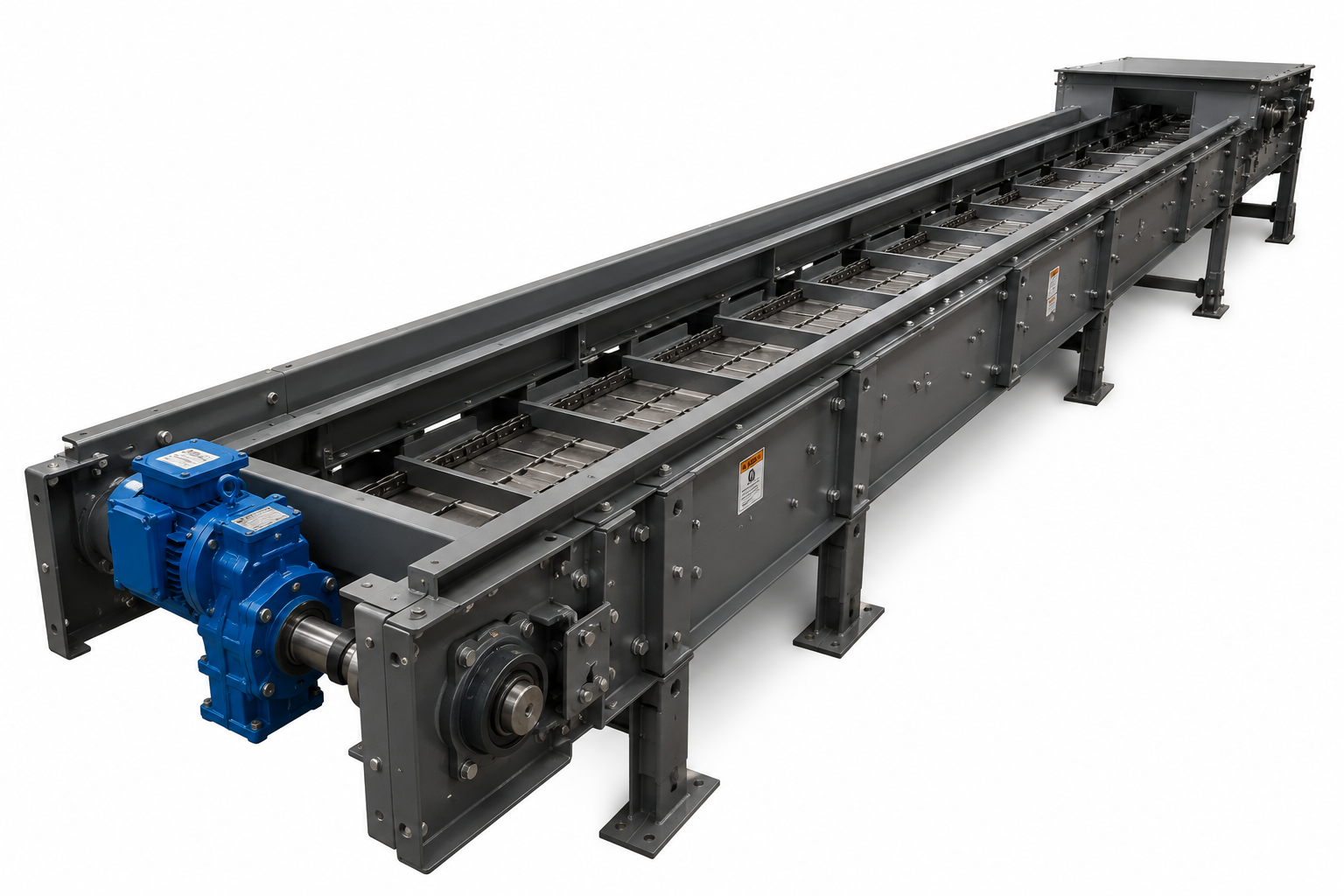
Drag chain conveyor systems have become one of the most reliable solutions for bulk material handling across a wide range of industries. As manufacturing, mining, cement, agriculture, power generation, and chemical processing continue to expand, businesses require dependable equipment that can transport bulk materials efficiently while reducing manual labor and operational costs. A drag chain conveyor offers excellent durability, consistent material flow, and the ability to handle demanding industrial environments, making it a preferred choice for modern material handling applications.
By automating the movement of bulk materials, businesses can improve productivity, reduce downtime, and maintain a safer and more organized workplace.
What Is a Drag Chain Conveyor?
A Drag chain conveyor is a material handling system that uses one or more continuous chains fitted with flights or paddles to move bulk materials through an enclosed conveyor housing. Instead of relying on a moving belt, the chain drags the material along the conveyor path, making it suitable for handling abrasive, heavy, or irregular materials.
Drag chain conveyors are commonly used for transporting:
- Coal
- Cement
- Ash
- Grains
- Fertilizers
- Sand
- Minerals
- Biomass
- Industrial powders
Their robust construction makes them ideal for continuous industrial operations where reliability is essential.
Efficient Bulk Material Handling
Bulk material transportation is one of the most important processes in industrial production. Delays or interruptions in material movement can reduce production efficiency and increase operating costs.
A Drag chain conveyor provides continuous and controlled transportation of bulk materials between storage areas, processing equipment, and packaging units. This automated movement helps maintain a steady production flow while reducing manual intervention.
Businesses benefit from:
- Continuous material transportation
- Improved production efficiency
- Reduced handling time
- Better workflow management
- Higher productivity
Efficient material handling allows manufacturers to meet production targets while maintaining product quality.
Built for Heavy-Duty Applications
Industrial environments often involve handling materials that are heavy, abrasive, or difficult to transport.
A Drag chain conveyor is specifically designed for these demanding conditions. Its heavy-duty construction allows it to operate reliably even when transporting materials that could damage conventional conveyor systems.
This makes drag chain conveyors suitable for industries where durability and consistent performance are critical.
Reducing Material Spillage
Material loss during transportation not only increases operating costs but also creates additional cleaning and maintenance work.
Because a Drag chain conveyor operates within an enclosed housing, it helps contain materials throughout the conveying process. This design minimizes dust generation and significantly reduces material spillage.
The benefits include:
- Cleaner production environments
- Lower material waste
- Improved inventory control
- Reduced housekeeping costs
- Better environmental compliance
These advantages contribute to greater operational efficiency and improved workplace conditions.
Supporting Continuous Production
Modern manufacturing facilities require uninterrupted material flow to maintain productivity.
A Drag chain conveyor operates continuously, ensuring raw materials are delivered consistently to production equipment. This helps eliminate bottlenecks and keeps manufacturing processes running smoothly.
Continuous material movement results in:
- Higher production output
- Reduced process interruptions
- Improved equipment utilization
- Faster production cycles
- Better coordination across departments
Reliable conveying systems are essential for maintaining efficient industrial operations.
Lowering Labor Costs
Manual transportation of heavy bulk materials requires significant labor and increases physical strain on employees.
By installing a Drag chain conveyor, businesses can automate repetitive material handling tasks. Employees can focus on machine operation, quality control, and process management rather than transporting materials manually.
Automation helps organizations achieve:
- Reduced labor costs
- Higher workforce productivity
- Improved operational efficiency
- Better resource allocation
- Lower employee fatigue
These improvements support long-term profitability while increasing production capacity.
Enhancing Workplace Safety
Industrial safety is a priority for every manufacturing facility.
A Drag chain conveyor improves workplace safety by reducing manual lifting and providing controlled transportation of bulk materials. The enclosed conveyor design also helps reduce dust exposure and keeps work areas cleaner.
Safety advantages include:
- Reduced employee injuries
- Lower physical strain
- Organized material movement
- Cleaner production facilities
- Improved compliance with workplace safety standards
A safer workplace contributes to uninterrupted production and improved employee confidence.
Easy Integration into Industrial Operations
Modern production facilities rely on integrated material handling systems to maximize efficiency.
A Drag chain conveyor can be incorporated into various industrial processes, including storage systems, crushers, mixers, hoppers, silos, processing equipment, and packaging lines.
Its flexibility makes it an effective solution for both new manufacturing facilities and existing plants seeking to upgrade their material handling systems.
Low Maintenance and Long Service Life
Businesses prefer equipment that delivers reliable performance while minimizing maintenance costs.
A well-designed Drag chain conveyor is built using durable components that withstand demanding operating conditions. With regular preventive maintenance, businesses can reduce unexpected breakdowns and extend equipment life.
Routine maintenance generally includes:
- Chain inspection
- Flight examination
- Lubrication of moving parts
- Checking drive components
- Cleaning accumulated materials
Preventive maintenance helps ensure continuous operation and reduces costly downtime.
Choosing the Right Drag Chain Conveyor
Selecting the appropriate conveyor depends on material characteristics, conveying capacity, operating environment, and production requirements.
Businesses seeking dependable material handling solutions can explore:
The available drag chain conveyor systems are designed to deliver efficient bulk material transportation, dependable performance, and long-term reliability for a wide variety of industrial applications.
Conclusion
A Drag chain conveyor is a preferred solution for businesses involved in bulk material handling because it provides reliable transportation, supports continuous production, reduces material spillage, lowers labor costs, and improves workplace safety. Its robust construction and enclosed design make it particularly suitable for industries handling abrasive, heavy, or dusty materials.
As industrial operations continue to expand and adopt automation, investing in a high-quality drag chain conveyor enables businesses to improve efficiency, reduce operational costs, and maintain consistent production performance. With dependable operation and long service life, it remains a valuable investment for modern material handling systems.
Frequently Asked Questions
1. What is a Drag chain conveyor?
A Drag chain conveyor is a material handling system that uses chains with attached flights to move bulk materials through an enclosed conveyor housing efficiently.
2. Which industries commonly use Drag chain conveyors?
Drag chain conveyors are widely used in mining, cement, agriculture, power generation, food processing, chemical manufacturing, recycling, and bulk material handling industries.
3. What materials can a Drag chain conveyor transport?
It can transport coal, cement, sand, ash, fertilizers, grains, minerals, biomass, industrial powders, and other bulk materials.
4. Why do businesses prefer a Drag chain conveyor?
Businesses prefer it because it offers reliable bulk material transportation, reduces material spillage, supports continuous production, lowers labor costs, and provides long-lasting performance.
5. Does a Drag chain conveyor improve workplace safety?
Yes. It minimizes manual handling, reduces employee exposure to dust through its enclosed design, and creates a safer working environment.
6. What maintenance does a Drag chain conveyor require?
Routine maintenance includes inspecting chains, flights, drive components, lubrication, cleaning accumulated materials, and checking system alignment for optimal performance.
7. Is a Drag chain conveyor suitable for industrial automation?
Yes. A Drag chain conveyor integrates easily with hoppers, silos, crushers, processing equipment, and automated production systems, making it ideal for modern industrial automation.