
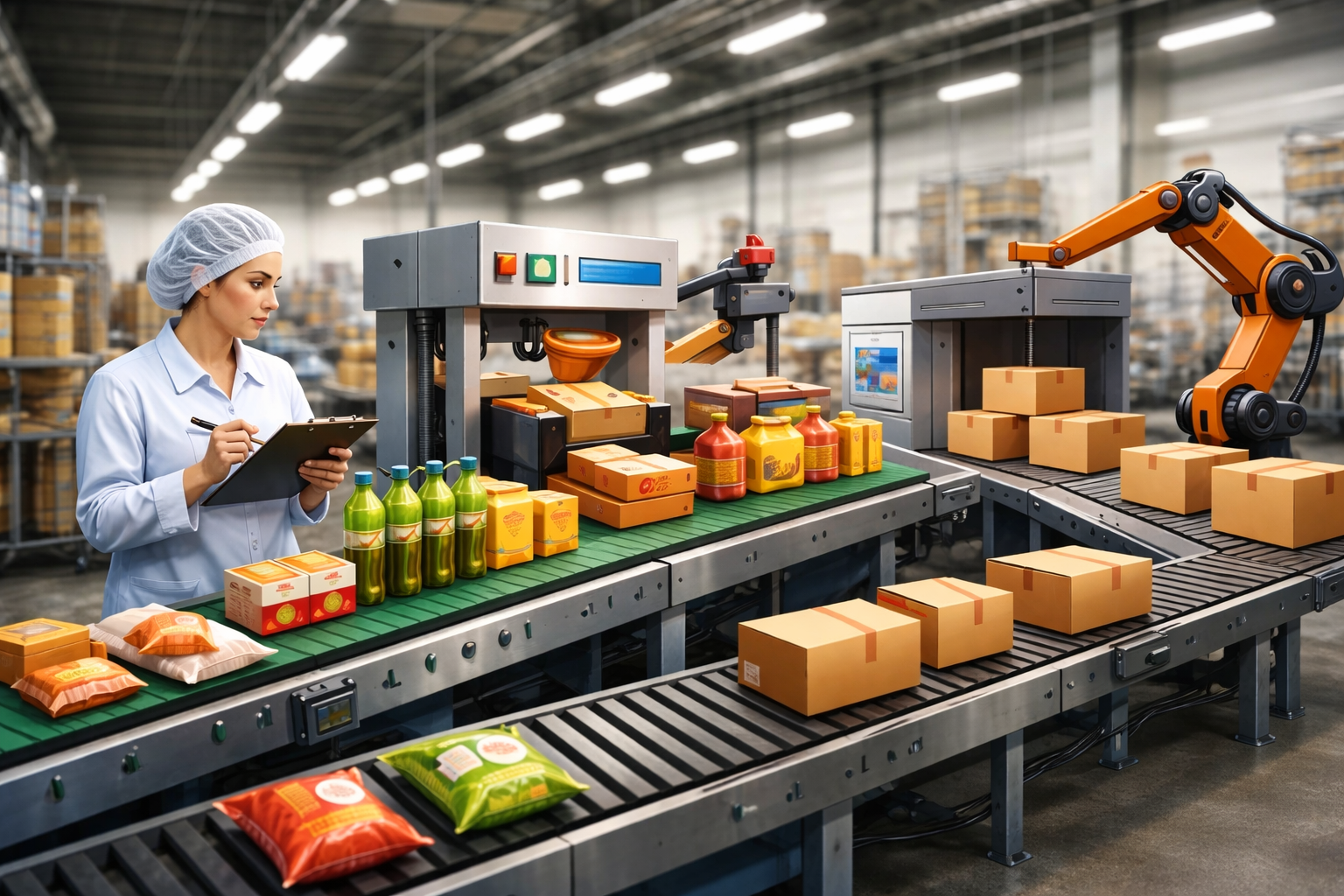
The best conveyor systems for FMCG and food processing include belt conveyors for smooth handling of products, modular plastic conveyors for wet and washdown areas, roller conveyors for cartons and secondary packaging, and stainless steel hygienic conveyors for direct food contact. The right choice depends on the type of product, speed, hygiene standards, and layout needs.
Fast moving consumer goods or FMCG and food processing plants rely on speed, hygiene, and consistency. Therefore, even a few seconds of delay or risk of contamination on the packaging line may impact productivity and increase the costs. That’s where the right conveyor system can make a difference. Is a packing belt conveyor right for FMCG and food processing industries? Well, choosing the right one is not just for moving the products from one point to another but about improving throughput, maintaining food safety, reducing downtime, and scaling operations efficiently.
Table of Contents
Significance of Conveyor Systems in Packaging
Here is why you need to be careful when choosing conveyor systems for FMCG and food processing industries:
- High-speed product handling
- Hygienic and easy-to-clean surfaces
- Minimal manual labor
- Reduced product damage
- Continuous operation with low downtime
Modern conveyors help automate workflows while maintaining strict food safety standards. The right system can increase productivity by 20%–40% while lowering operational costs.
Types of Conveyor Systems for Packaging Lines
Take a look below for the most effective material handling system for FMCG and food processing plants:
1. Belt Conveyors
Belt conveyors are the most common solution for packaging lines and are ideal for cartons, boxes, pouches, and trays. Here are the benefits:
- Smooth and stable transport
- Gentle on fragile products
- Easy integration with labeling and filling machines
- Cost-effective
Food-grade belts made from PU or PVC are easy to sanitize and are ideal for hygienic operations.
2. Modular Conveyors
Modular conveyors use interlocking plastic segments that create a durable and flexible surface and are appropriate for wet environments, washdowns, and heavy loads.
Benefits:
- Highly durable
- Easy maintenance and quick part replacement
- Resistant to corrosion
- Excellent drainage
They are widely used in meat, dairy, and beverage processing plants.
3. Roller Conveyors
Roller conveyors move products by using gravity or powered rollers and best for cartons, crates, and secondary packaging.
Benefits:
- Energy efficient
- Simple design
- Ideal for accumulation zones
- Low maintenance
They are perfect for end-of-line packaging and palletizing areas.
4. Flexible Conveyors
Flexible conveyors can expand, contract, and curve to fit different layout and are best for dynamic or limited spaces.
Benefits:
- Space-saving
- Portable and adjustable
- Quick installation
- Great for seasonal or temporary lines
They provide excellent flexibility for growing facilities.
5. Stainless Steel Conveyors
Stainless steel conveyors are specifically designed for food-grade operations and are best for direct food and contact zones.
Benefits:
- Easy cleaning and sanitization
- Rust and bacteria resistant
- Complies with food safety regulations
- Long service life
These conveyors are essential in high-hygiene areas like bakery and ready-to-eat packaging.
Things to Consider When Buying Conveyor Systems
Choosing the right industrial conveyor system depends on something more than price and here are the factors to consider:
- Product Type
If you are you moving bottles, pouches, frozen foods, or cartons, make sure you know that fragile items need gentle handling while heavy loads require robust systems.
- Speed Requirements
High-volume FMCG lines need conveyors that can maintain consistent speed without jams or slowdowns.
- Hygiene Standards
Food processing plants must meet strict cleaning protocols, so you need to look for washable and food-grade materials.
- Layout & Space
Compact or complex floor plans may require flexible or modular conveyors.
- Maintenance Needs
Quick-access components and replaceable parts reduce downtime, so ensure that the system you choose comes with least maintenance hassles.
- Scalability
You need to choose systems that allow future expansion or automation integration.
Benefits of Choosing the Right Conveyor System
Investing in the correct conveyor delivers measurable advantages:
- Faster packaging throughput
- Reduced labor costs
- Improved safety of workers
- Less product damage
- Better hygiene compliance
- Higher overall efficiency
In competitive FMCG markets, these benefits directly impact profitability.
Final Thoughts
The best conveyor system for FMCG and food processing packaging lines balances speed, hygiene, durability, and flexibility. Evaluate your product type, production goals, and facility layout carefully before making a decision. A well-chosen conveyor doesn’t just move products but transforms your entire packaging workflow. Are you ready to pace up your packaging operations? Tech Trek designs reliable, hygienic, and cost-efficient conveyor systems tailored for FMCG and food processing plants. Visit Tech Trek Engineering to get a free consultation today.
FAQs
What is the best conveyor system for FMCG packaging lines?
Belt conveyors are the most popular choice for FMCG packaging lines because they provide smooth, stable, and high-speed movement for cartons, pouches, and boxes while reducing product damage.
Which conveyor is best for food processing plants?
Stainless steel hygienic conveyors and modular plastic conveyors are best for food processing plants because they are easy to clean, corrosion-resistant, and meet strict food safety and sanitation standards.
Why are modular plastic conveyors used in food factories?
Modular plastic conveyors are used because they withstand moisture, allow quick cleaning, resist bacteria buildup, and require low maintenance, making them ideal for washdown environments.
How do conveyors improve packaging line efficiency?
Conveyors automate product movement, reduce manual handling, maintain consistent speed, and minimize downtime, which increases productivity and lowers labor costs.
What factors should you consider when choosing a conveyor system?
You should consider product type, load weight, speed requirements, hygiene standards, layout space, maintenance needs, and future scalability before selecting a conveyor system.
Are food-grade conveyor belts necessary?
Yes. Food-grade conveyor belts are necessary to prevent contamination, comply with safety regulations, and ensure safe handling of edible products.