
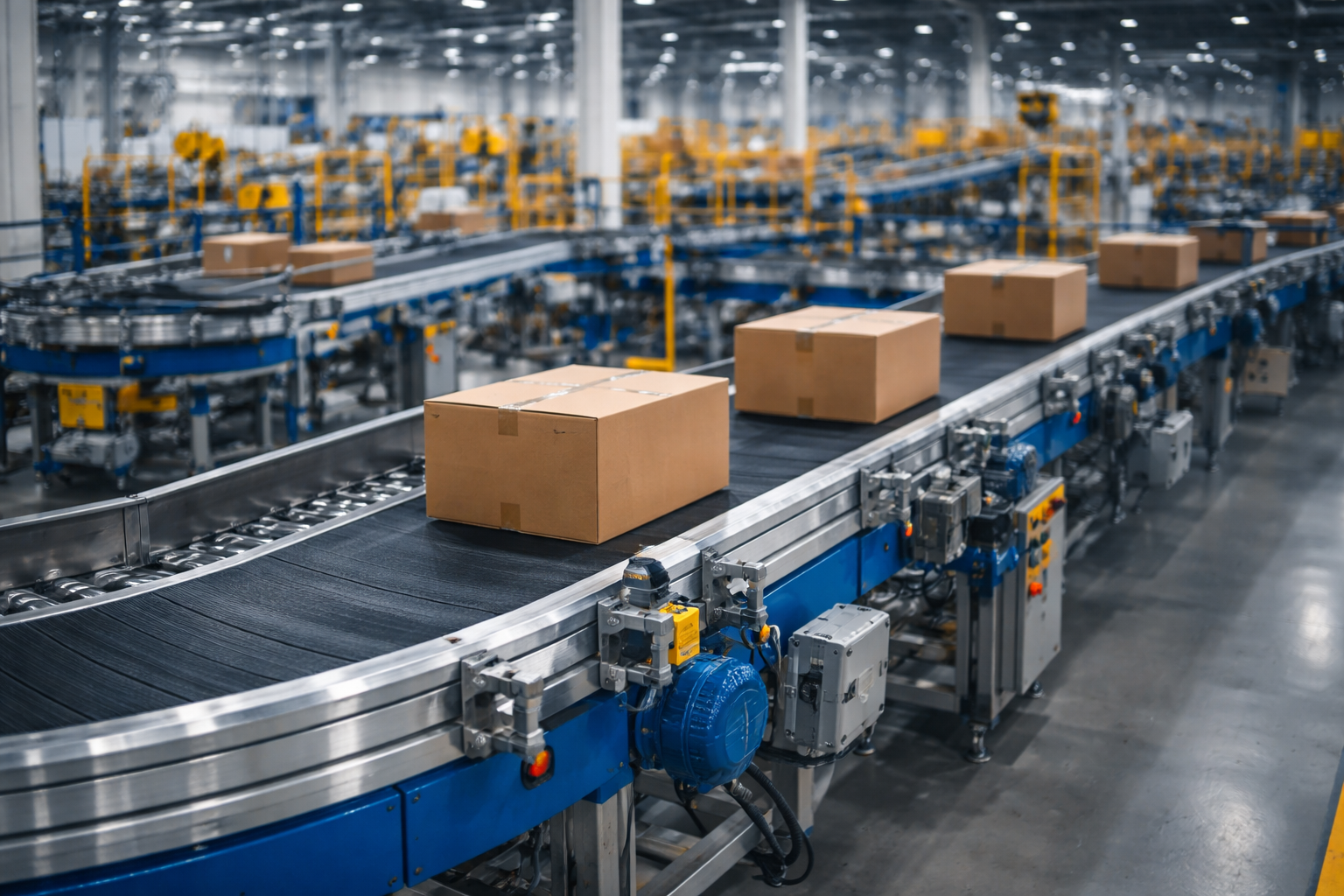
Conveyor speed impacts production efficiency greatly compared to the type of conveyor because it directly controls cycle time, throughput, and material flow. Even the most advanced conveyor system may fail to perform when speed is not properly optimized. Even a basic conveyor running at the right speed may increase output and reduce bottlenecks.
When choosing an industrial conveyor system for improving production lines, most businesses prioritize the type of system instead of the speed. Even though design matters, optimization of speed is the main driver behind the functioning and optimizing production. So, a great design with the wrong speed can ruin your workflow whereas a simple system with the right speed can boost productivity.
Table of Contents
What is Conveyor Speed?
Conveyor speed with which materials move along the system, typically measured in:
- Feet per minute (FPM)
- Meters per second (m/s)
- Units per hour
It determines:
- How quickly products move between stations
- Overall production rate
- Worker efficiency
- Equipment synchronization
In short, speed of the material handling system controls the pace of your entire operation.
Why Conveyor Speed Matters more Than Time?
Here is why you need to prioritize the speed of the conveyor system:
1. Reduces Bottlenecks
Slow conveyors create backups between workstations, leading to:
- Idle machines
- Waiting workers
- Increased cycle time
Optimized speed ensures a balanced flow, preventing pileups and stoppages.
2. Improves Workflow Synchronization
Modern production lines rely on multiple systems working together:
- Filling machines
- Packaging lines
- Sorting systems
- Palletizers
If conveyor speed does not match equipment speed, efficiency drops fast.
3. Impacts Throughput
Throughput is the number of units that move per hour. Even a high-end conveyor won’t improve output if it runs slowly. Increasing speed delivers immediate gains without replacing equipment.
4. Lower Costs than Replacing Conveyor Types
Switching conveyor types is expensive:
- New equipment costs
- Installation downtime
- Layout changes
- Training time
Adjusting speed, on the other hand may only require:
- Variable frequency drives (VFDs)
- Motor adjustments
- Simple calibration
That way, it becomes much cheaper and the ROI is better.
5. Improved Product Handling
Speed affects the safety of products as well.
When the speed is too fast it may lead to:
- Spills
- Damage
- Misalignment
When the speed is too slow, it may lead to:
- Congestion
- Overloading
Optimized speed protects products and reduces waste, something that the conveyor type alone cannot guarantee.
How to Optimize Conveyor Speed?
Step 1: Measure Current Throughput
Track units per hour and identify slow zones
Step 2: Calculate Ideal Speed
Match conveyor output to the slowest machine in the line
Step 3: Install Variable Speed Controls
Use VFDs for easy adjustments
Step 4: Test Gradually
Increase speed in small increments to avoid product damage
Step 5: Monitor Continuously
Use sensors and analytics for real-time improvements
Benefits of Speed Optimization:
- Higher production output
- Reduced bottlenecks
- Lower operational costs
- Less downtime
- Improved product quality
- Better ROI
Conclusion
While choosing the right conveyor type is important, speed is the true performance driver. A fast and well-balanced assembly line belt conveyor system will always outperform a premium conveyor running inefficiently. If you want measurable improvements in productivity, you need to focus first on optimizing speed instead of replacing equipment.
Leading Conveyor Manufacturers understand that performance depends not just on design, but on proper speed calibration, load balance, and workflow alignment. Don’t let slow or inefficient conveyor speeds limit your production output. At Tech Trek, we help manufacturers streamline material handling systems with the best conveyor solutions tailored to your workflow.
FAQs
Why is conveyor speed important in production efficiency?
Conveyor speed directly affects how fast materials move through the production line. Higher, optimized speeds increase throughput, reduce delays, and prevent bottlenecks. Even a well-designed conveyor system will underperform if the speed is too slow or inconsistent, making speed one of the biggest drivers of overall efficiency.
Is conveyor speed more important than conveyor type?
Yes, in many cases conveyor speed has a greater impact on output than conveyor type. While the right type ensures proper handling, speed determines how much product moves per hour. Optimizing speed often improves productivity faster and more affordable than replacing the conveyor system.
How does conveyor speed affect throughput?
Throughput increases as conveyor speed increases. Faster speeds move more units per minute, allowing higher production rates.
What happens if a conveyor runs too fast?
Excessive speed can cause product damage, spills, misalignment, and unsafe working conditions. It may also overload downstream equipment. Running too fast often reduces efficiency rather than improving it, so controlled and optimized speeds are essential for smooth operations.