
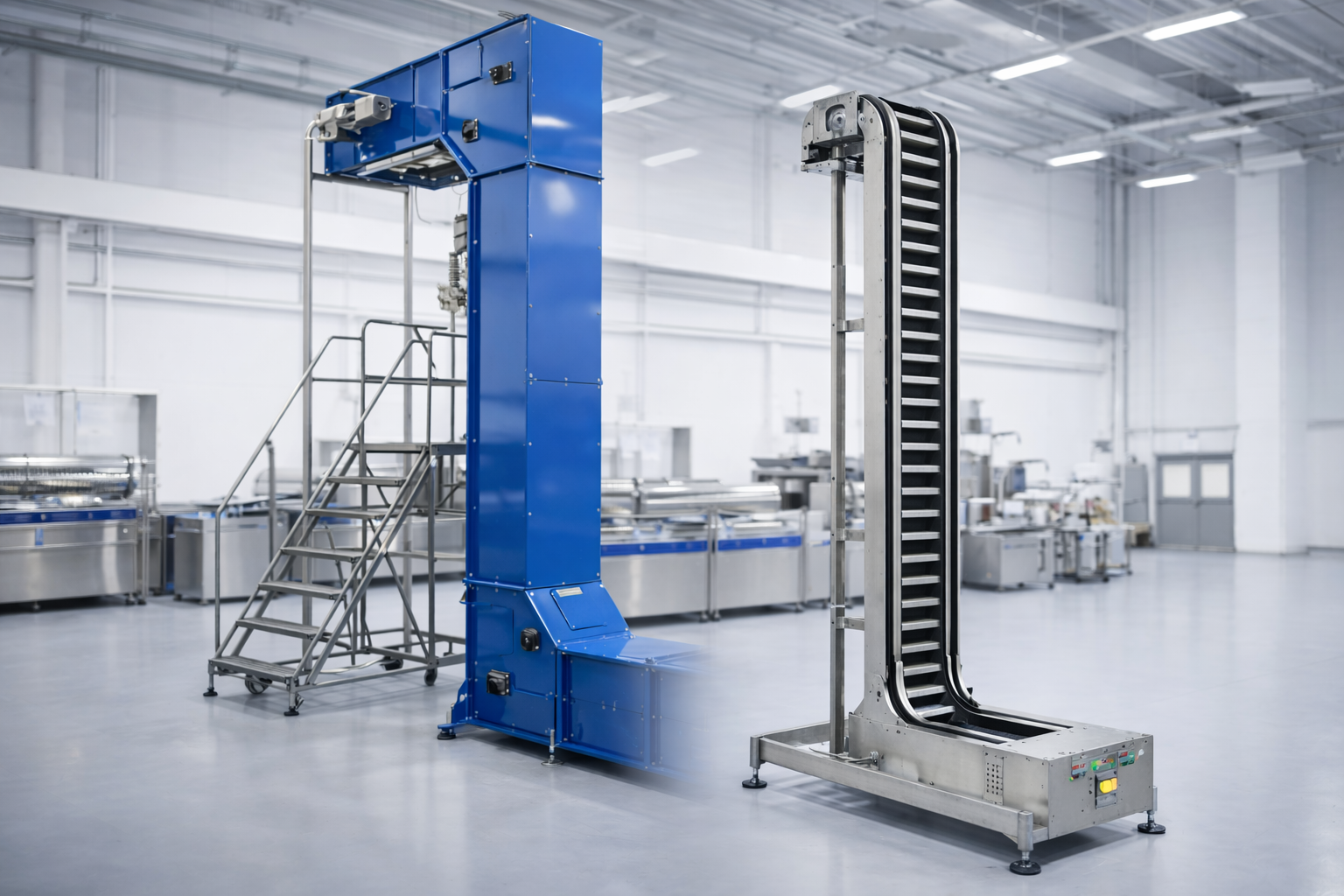
Bucket elevators are superior to vertical conveyors in bulk material handling as they can handle larger volumes efficiently. Furthermore, they use less power, can handle abrasive materials without compromising safety, require less maintenance, and offer lower cost of operation over time.
One of the common challenges industries face in material handling is the movement of bulk goods. It remains a common challenge for agriculture, cement, mining, food processing, and manufacturing industries. Even though both vertical and bucket conveyors are used for lifting materials, the former still continues to be the preferred choice. They offer higher capacity, consume low energy, better durability, and cost-effective operation. Here is why bucket elevators outperform the vertical conveyors in material handling.
Table of Contents
What is a Bucket and Vertical Conveyor System?
A bucket elevator is a vertical conveying system with buckets attached to a chain or belt to carry bulk materials and lift them upward. These systems are widely used for:
- Grains
- Cement
- Sand
- Fertilizers
- Chemicals
- Powders
- Aggregates
It is specifically designed for continuous and high-capacity bulk material transport.
A vertical conveyor is another material handling system that helps move materials upward using belts, trays, and platforms. These are often used in packaging lines or manufacturing facilities for moving discrete or boxed items instead of loose bulk materials. Unfortunately, this conveyor system may struggle with abrasive or heavy bulk materials.
Why Bucket Elevators are Better than Vertical Conveyors?
Here is a comparison of both systems across the most important performance factors:
1. Higher Capacity for Bulk Materials
Bucket elevators are specifically designed for moving huge volumes of goods in an uninterrupted manner. Due to the buckets attached, they can easily carry large volumes with every cycle. Here are the benefits:
- Faster throughput
- Can easily handle tons of goods per hour
- Ideal for large-scale operations
Vertical conveyors typically have low or limited load capacities and tend to retard loose or heavy materials.
2. Improved Energy Efficiency
Bucket elevators require less power due to assistance of gravity while discharging material at the top. Moreover, the convenient design helps materialize resistance and friction. Here are the benefits:
- Lower electricity bills
- Reduced operational costs
- More sustainable performance
Vertical conveyors, on the other hand, often use motors to lift entire platforms or belts and consume more energy.
3. Appropriate for Abrasive and Heavy Materials
Bulk materials like clinker, sand, minerals, and coal is usually abrasive. However, a bucket elevator can easily carry these materials due to these features:
- Heavy-duty steel buckets
- Wear-resistant belts or chains
- Reinforced casings
Vertical conveyors often experience faster wear and tear and may eventually break down when carrying abrasive materials.
4. Low Maintenance Requirements
Bucket elevators have fewer complex moving parts, which eases maintenance requirements unlike vertical systems that may involve multiple rollers, belts, lifts, and sensors. More the components higher are the chances of failure. Here are the benefits of bucket elevators:
- Easier inspections
- Quick repairs
- Less downtime
5. Space-Saving Design
Bucket elevators move materials straight up, saving valuable floor space, making them ideal for tight layouts. Vertical conveyor systems often require wider footprints or additional platforms.
6. Cost-Effective
Even though the upfront cost of bucket elevators may vary, they are typically low-cost due to the following features:
- Reduced energy usage
- Fewer repairs
- Longer lifespan
- Less downtime
Here is a snapshot of the comparison:
| Features | Bucket Elevators | Vertical Conveyors |
| Bulk handling | Excellent | Moderate |
| Capacity | High | Limited |
| Energy-Efficiency | High | Medium |
| Maintenance | Low | Higher |
| Abrasive Materials | Excellent | Poor-Moderate |
| Space Usage | Compact | Larger |
Industries that Benefit from Bucket Elevators
Bucket elevators are commonly used in:
- Agriculture and grain handling
- Cement plants
- Mining and aggregates
- Chemical processing
- Food and feed manufacturing
- Fertilizer production
If your operation deals with powders, granules, or heavy materials, and you need an industrial conveyor system, bucket elevators are typically the smartest investment.
Final Thoughts
When it comes to bulk material handling, bucket elevators consistently outperform vertical conveyors in capacity, efficiency, durability, and cost-effectiveness. They are specifically built for moving heavy and loose materials quickly and reliably.
Upgrade your bulk material handling with reliable, high-performance solutions from Tech Trek. Contact our experts today to find the perfect bucket elevator system for your operation and boost efficiency, safety, and productivity. Upgrade your bulk material handling with reliable and high-performance solutions from Tech Trek.
Contact our experts today to find the perfect bucket elevator system for your operation and boost efficiency, safety, and productivity. Visit us https://techtrekconveyor.com/ today.
FAQs
1. Are bucket elevators energy efficient?
Yes, bucket elevators are highly energy efficient. Their gravity-assisted discharge and simple mechanical design reduce power consumption, making them more cost-effective than many vertical conveyor systems for long-term operations.
2. Can bucket elevators handle abrasive materials?
Bucket elevators are built with durable steel buckets, reinforced belts or chains, and wear-resistant casings. This allows them to safely handle abrasive materials like sand, coal, clinker, and minerals with minimal damage or downtime.
3. What is the difference between a bucket elevator and a vertical conveyor?
A bucket elevator lifts loose bulk materials using buckets, while a vertical conveyor moves unit loads like boxes or packages on belts or platforms. Bucket elevators are better for heavy, continuous bulk handling, while vertical conveyors suit lighter goods.
4. Are bucket elevators cost-effective for long-term use?
Yes, bucket elevators typically have lower operating costs due to reduced energy use, fewer breakdowns, and minimal maintenance. Their long lifespan makes them a cost-effective investment for bulk material handling systems.