Description
Custom Incline Conveyor Manufacturer
An Incline Belt Conveyor is a material handling system designed to transport materials from a lower level to a higher level at a fixed or adjustable angle. It is widely used in industries where vertical or angular movement of products is required without manual lifting. The incline conveyor system helps optimize floor space, improve workflow efficiency, and reduce labor costs while ensuring safe and controlled material movement.
At Tech Trek Engineering, an incline belt conveyor manufacturer, we design and manufacture equipment that are robust, efficient, and customized according to the customer’s layout, material type, and load requirement. Our incline conveyors are engineered to deliver reliable performance even in continuous industrial operations.
What is an Incline Belt Conveyor?
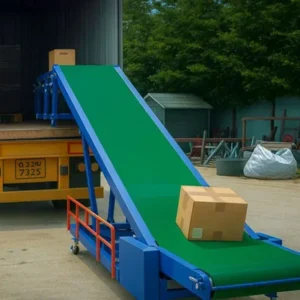
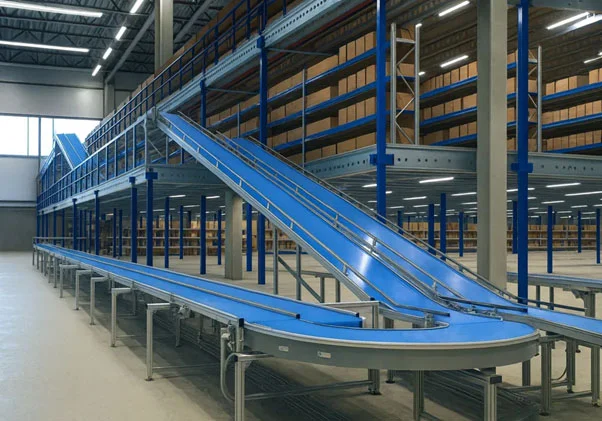
An incline conveyor belt system is a type of belt conveyor that operates at an upward or downward angle to move materials between different height levels. The conveyor uses a continuous belt supported on a rigid structure, driven by a motorized pulley system.
To prevent material rollback during upward movement, incline belt conveyors are often equipped with special belt surfaces such as rough top belts, chevron belts, or side walls with cleats, depending on the application.
Working Principle:
The working principle of an incline belt conveyor is similar to a flat belt conveyor, with additional design considerations for angle and grip:
- The geared motor drives the head pulley of the conveyor.
- The belt moves upward or downward along the inclined structure.
- Materials placed at the loading point are carried along the belt surface.
- Special belt textures or cleats provide additional friction to prevent slipping.
- The material is discharged smoothly at the top or bottom point.
- The belt returns through the underside of the conveyor frame, completing the cycle.
This controlled movement allows safe transportation of materials across elevation differences.
Key Features of Incline Belt Conveyor:
- Strong and stable inclined structure
- Smooth and controlled material movement
- Anti-slip belt options for upward conveying
- Suitable for continuous and heavy-duty operation
- Compact design to save floor space
- Low maintenance requirement
- Energy-efficient drive system
Types of Incline Belt Conveyors:
Based on application and material type, incline belt conveyors can be designed as:
- Incline belt conveyor with rough top belt
- Incline belt conveyor with chevron belt
- Incline belt conveyor with cleats
- Incline belt conveyor with side walls
- Adjustable incline belt conveyor
- Incline–decline belt conveyor combination
The selection depends on incline angle, product weight, size, and surface characteristics.
Belt Options for Incline Applications:
To ensure proper grip and safe material handling, we offer:
- PVC rough top belts
- PU rough top belts (food-grade option available)
- Chevron belts for higher incline angles
- Cleated belts for bulk or loose materials
- Oil-resistant and heat-resistant belts
Belt selection plays a crucial role in conveyor performance and efficiency.
Applications of Incline Belt Conveyor:
Incline belt conveyors are widely used in:
- Manufacturing plants
- Packaging and sorting lines
- Warehouses and logistics centers
- Food processing industries
- Agricultural and grain handling units
- Cement, coal, and mineral handling
- FMCG and consumer goods industries
Incline conveyor installation is ideal for transferring materials between floors, machines, or process stages.
Advantages of Incline Belt Conveyor:
- Eliminates manual lifting of materials
- Saves floor space compared to vertical lifts
- Ensures safe and controlled material transfer
- Improves production efficiency
- Reduces labour and operational costs
- Minimizes product damage
- Suitable for automation integration
- Custom-designed systems based on actual site conditions
- High-quality belts and mechanical components
- Strong structural fabrication for long service life
- Reliable performance under continuous load
- Competitive pricing with consistent quality
- Installation support and after-sales service
Our incline belt conveyors are designed to meet real-world industrial challenges.
Customization Options:
As a Custom Incline Conveyor Manufacturer, we provide extensive customization options, including:
- Adjustable incline angle
- Variable speed control using VFD
- Side walls and cleats for material retention
- Skirt boards to prevent spillage
- Special coatings or food-grade finishes
- Integration with flat or decline conveyors
Incline Belt Conveyor – FAQs:
Q1. What is the maximum incline angle for a belt conveyor?
The maximum incline angle depends on the belt type, material characteristics, and use of cleats or chevron patterns.
Q2. How do you prevent material from slipping on an incline conveyor?
By using rough top belts, chevron belts, cleats, side walls, and proper speed selection.
Q3. Can incline belt conveyors handle bulk materials?
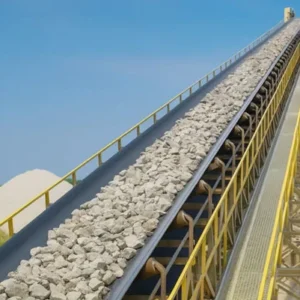
Yes, with suitable belt selection and side wall arrangements, bulk materials can be handled efficiently.
Q4. Is an incline belt conveyor suitable for food industries?
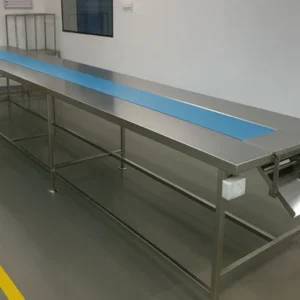
Yes, food-grade belts and stainless steel structures are available for hygienic applications.
Q5. What factors affect the price of an incline belt conveyor?
Price depends on conveyor length, incline angle, belt type, load capacity, and customization level.
Q6. Can speed be controlled in incline belt conveyors?
Yes, variable speed control can be provided using VFD or PLC systems.
Q7. Do you provide installation and commissioning support?
Yes, we provide technical guidance and installation support to ensure smooth operation.