
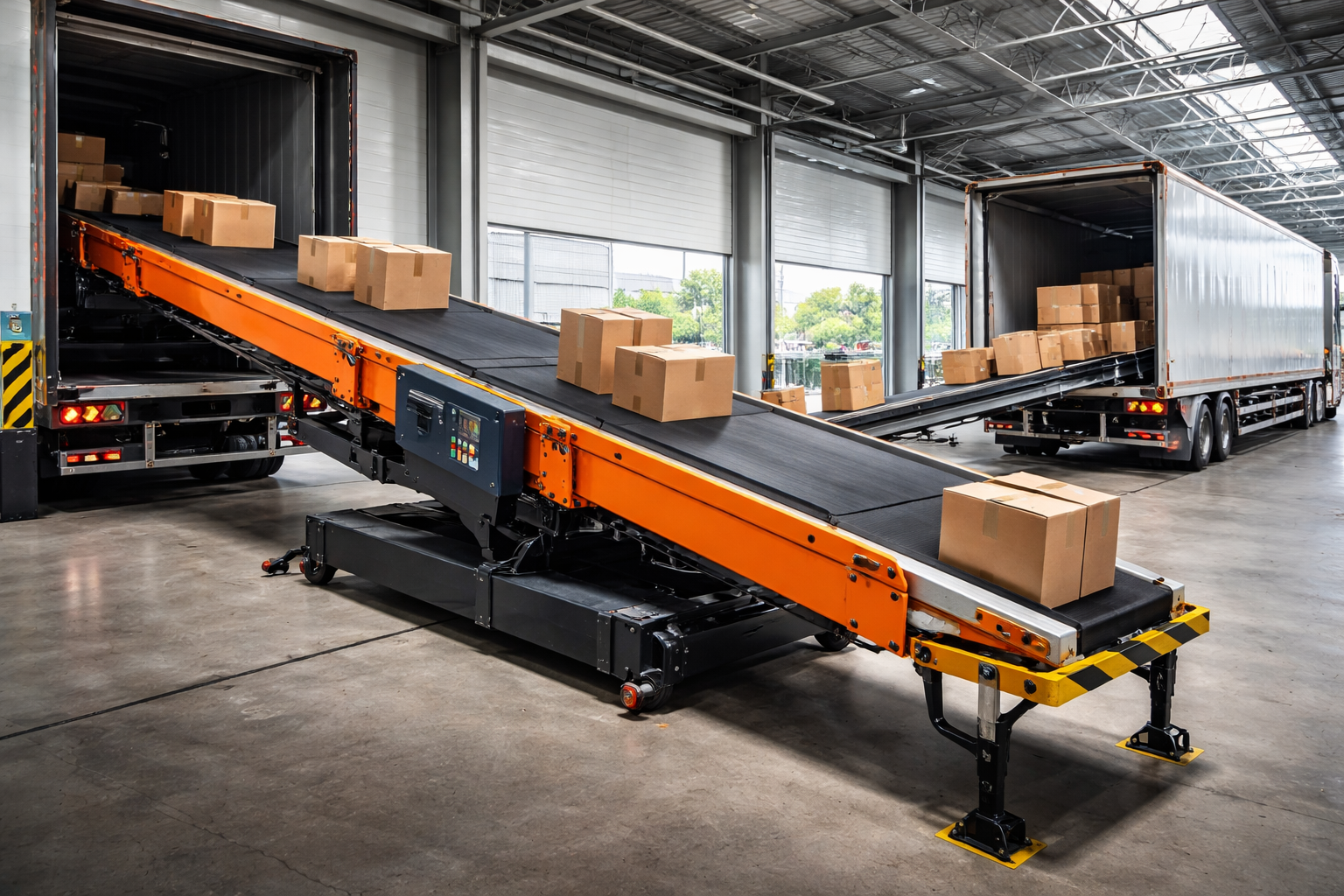
Noise-reducing truck loading belt conveyors help improve industrial efficiency by enabling faster and uninterrupted loading. It also boosts workplace safety by reducing harmful noise levels that may lead to fatigue, miscommunication, and accidents. So, with a truck loading conveyor, it’s easier to streamline logistics operation and protect the hearing of workers in different facilities.
Table of Contents
Why Noise is a Hidden Risk in Truck Loading Operations?
Truck loading zones are among the noisiest areas in industrial facilities. Traditional truck loading and unloading conveyors generate high noise levels due to motor vibration, roller friction, belt slippage, and metal-to-metal contact. Over time, this noise creates not just discomfort but a serious operational and safety concern.
Excessive noise can lead to:
- Worker fatigue and reduced concentration
- Communication breakdowns during loading
- Increased risk of accidents and errors
- Long-term hearing damage
- Non-compliance with occupational safety standards
In high-volume loading environments, these issues directly impact productivity, employee well-being, and compliance costs.
How Reduced Noise improves Industrial Efficiency?
Here is how noise-reducing truck loading belt conveyors
boost efficiency in various industries:
1. Faster and Accurate Loading
Lower noise levels in industrial conveyors improve verbal communication between workers, forklift operators, and supervisors. Clear communication reduces misloads, delays, and rework, allowing loading teams to work faster and with fewer interruptions.
2. Reduced Worker Fatigue and Higher Output
Exposure to loud conveyor noise causes mental and physical fatigue. Noise-reducing conveyor manufacturers in India like Tech Teck have successfully created calmer working environments, helping employees stay focused and productive throughout long shifts.
3. Reduced Downtime and Maintenance
Quieter conveyors are often the result of better engineering and precision components. This leads to:
- Less vibration-related wear
- Fewer breakdowns
- Lower maintenance frequency
As a result, operations experience improved uptime and consistent throughput.
Reduced Noise Conveyors and Workplace Safety
Reduced Noise Conveyors and Workplace Safety
1. Lowers Risk of Accidents
In noisy environments, warning signals, alarms, and verbal cues can be missed. Noise-reducing conveyors help ensure that safety alerts are heard clearly, significantly reducing the risk of collisions, falls, or improper loading.
2. Hearing Protection Compliance
Occupational safety regulations in many regions limit permissible noise exposure. Quieter conveyors help facilities:
- Stay within legal noise thresholds
- Reduce reliance on mandatory hearing protection
- Lower the risk of long-term hearing loss claims
6. Improved Awareness
Quieter truck loading conveyors allow workers to better sense movement, equipment activity, and potential hazards thereby improving overall situational awareness.
Applications of Noise-Reducing Truck Loading Conveyors
Noise-reducing belt conveyors are especially beneficial in:
- High-volume distribution centers
- E-commerce fulfillment hubs
- Manufacturing plants with continuous loading
- Facilities operating near residential areas
- Indoor loading docks with echo-prone layouts
They are also ideal for companies focused on employee well-being, ESG goals, and long-term operational sustainability.
Factors to Consider When Choosing Noise Reducing Conveyors
To maximize safety and efficiency, here are the factors you need to consider when selecting a conveyor system:
1. Noise Rating (dB Levels)
When communicating with truck loading conveyor manufacturers, you need to ask for tested decibel ratings under real operating conditions and not just theoretical values.
2. Load Capacity and Belt Design
Make sure the conveyor can handle your product types without increasing friction or vibration.
3. Drive and Roller Technology
You can check for sealed bearings, rubberized rollers, and precision drives that minimize noise generation.
4. Maintenance Requirements
Quieter systems often perform best when properly maintained, so choose designs that simplify inspection and servicing.
5. Customization Options
Adjustable speed control, belt materials, and enclosure options can further reduce noise for specific environments.
Long-term Business Benefits
Here are the long-term business benefits you need to understand:
Investing in noise-reducing truck loading belt conveyors delivers measurable and long-term returns:
- Higher employee retention
- Lower injury and compensation costs
- Improved compliance with safety standards
- Enhanced operational efficiency
- Better workplace morale
These conveyor systems are not just an upgrade but a strategic investment in sustainable industrial operations.
Final Thoughts
When it comes to a truck loading conveyor, noise is more than an inconvenience in truck loading operations ; it is a productivity and safety risk as well .Noise-reducing truck loading belt conveyors address this challenge by creating quieter, safer, and more efficient loading environments.
Excessive noise, slow loading times, and frequent safety risks in truck docks quietly drain productivity and increase operational costs every day. Upgrade to noise-reducing truck loading conveyors from Tech Trek to create faster, safer, and quieter loading operations. Visit Tech Trek Conveyor to talk to our experts today.
FAQs
What is a noise-reducing truck loading conveyor?
A noise-reducing truck loading belt conveyor is a system designed to minimize sound during loading operations while maintaining high efficiency and load capacity.
Do quieter conveyors affect loading speed?
No, noise-reducing conveyors are engineered to maintain or improve loading speed while operating more smoothly and efficiently.
Are noise-reducing truck load conveyors compliant with safety regulations?
Yes, they help facilities meet occupational noise exposure limits and workplace safety standards.
How do noise-reducing conveyors improve productivity?
They enable clearer communication, reduce worker fatigue, and minimize downtime, leading to faster loading cycles.