
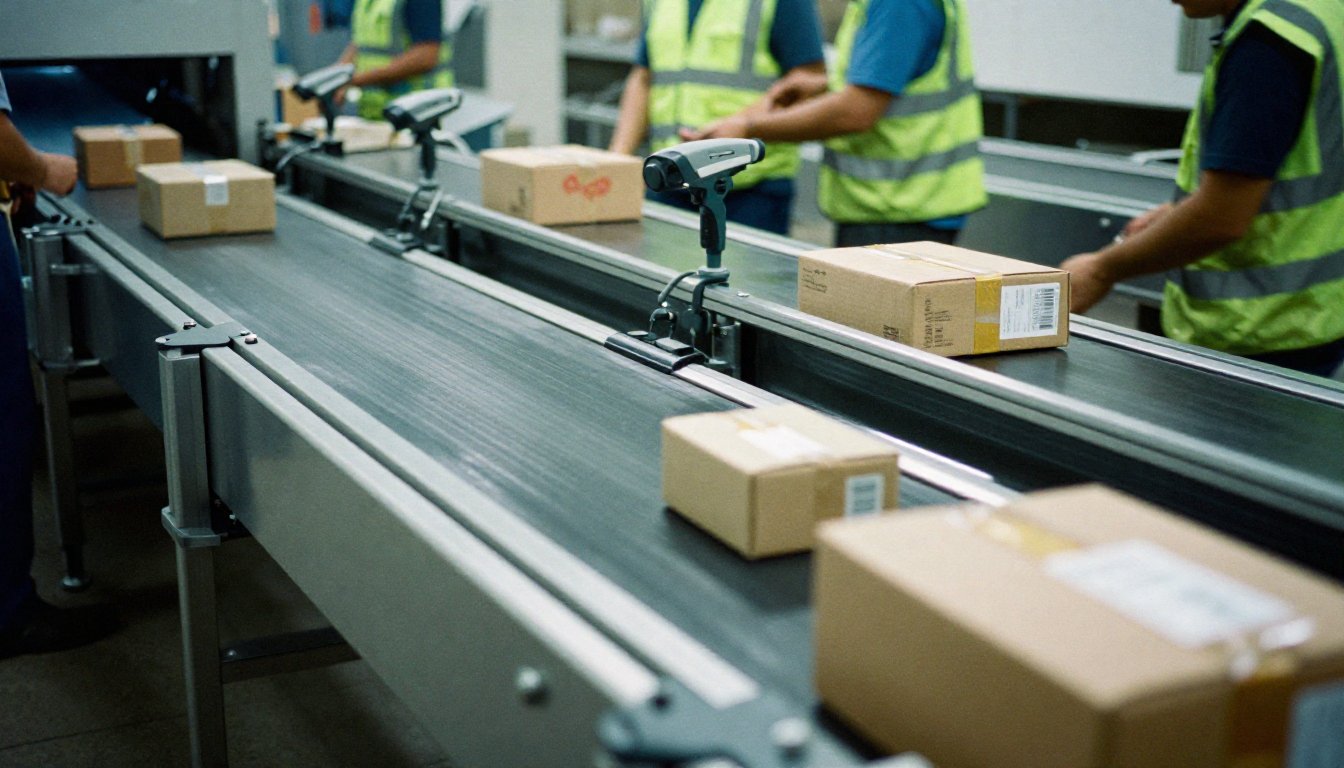
There is no denying that flat belt conveyor systems have long been the basic framework for material handling in industries like manufacturing, food processing, warehousing, and logistics. However, the newer systems are undergoing a major transformation and 2026 might just witness the integration of IoT and automation being undertaken by manufacturers to improve operations, perform, and deliver value.
Let us find out how a mechanical logistics solution is evolving into a smart and highly efficient system.
Table of Contents
Switch from Mechanical Smart Machines
Conventional flat belt conveyors were designed to move products from one point to another with minimal intelligence. Maintenance was reactive, speed control was manual, and performance data was largely unavailable.
With IoT and automation being implemented by flat belt conveyor manufacturers, they are no longer passive systems. Sensors, controllers, and software platforms now enable real-time monitoring, automated decision-making, and predictive optimization, turning flat belt conveyors into intelligent assets within the production ecosystem.
Transformation of Flat Belt Conveyor Systems
Here is how IoT and automation may bring transformation in flat belt conveyors:
1. Real-Time Monitoring
One of the biggest impacts of IoT on flat belt conveyor systems is continuous condition monitoring. Smart sensors track critical parameters such as:
- Belt speed and alignment
- Motor temperature and vibration
- Load weight and distribution
- Energy consumption
This data is transmitted to centralized dashboards, allowing operators to monitor conveyor health in real time. That way, any deviation from normal performance triggers alerts, enabling teams to address issues before they escalate into failures or downtime. As a result, businesses gain better visibility, higher uptime, and more control over daily operations.
2. Predictive Maintenance
Traditionally, conveyor maintenance followed fixed schedules or took place only after a breakdown, leading to excessive costs. However, for automated flat belt conveyors, IoT-driven analytics now make predictive maintenance possible.
By analyzing historical and real-time sensor data, automated systems can predict wear patterns, belt degradation, or motor stress. For flat belt conveyors used in high-throughput environments, this shift significantly lowers maintenance costs while improving operational reliability.
3. Improve Speed Accuracy and Control
Automation systems such as PLCs (Programmable Logic Controllers) and AI-driven control software are redefining how flat belt conveyors operate.
Automated flat belt conveyors can:
- Adjust speeds dynamically based on load or production demand
- Synchronize with robotic pick-and-place systems
- Integrate seamlessly with sorters, scanners, and packaging machines
- Automatically reroute products during congestion or faults
This level of automation ensures smoother workflows, higher throughput, and reduced human intervention, critical in modern warehouses and smart factories.
4. Energy Efficiency Through Smart Control
Energy consumption is a growing concern across industries. IoT-enabled flat belt conveyor systems contribute to energy optimization by monitoring usage patterns and adjusting operations accordingly.
Smart systems can:
- Shut down idle conveyor sections
- Optimize motor performance based on real-time load
- Reduce friction and belt wear through automated alignment
These improvements not only reduce energy costs but also support sustainability goals, making automated flat belt conveyors more environmentally responsible.
5. Improved Safety and Productivity
Automation and IoT also enhance workplace safety. Sensors can detect belt misalignment, overloads, or human presence in restricted zones, triggering automatic shutdowns when needed.
By reducing manual intervention and repetitive tasks, automated flat belt conveyors allow workers to focus on higher-value activities such as quality control, supervision, and process optimization, boosting overall productivity.
Conclusion
IoT and automation are essential drivers of modern material handling. By enabling new technology, flat belt conveyors are turning smarter, more connected, and functioning as strategic assets. Power your operations with smarter, future-ready conveyor solutions with Tech Trek, one of the renowned conveyor system manufacturers India. Visit Tech Trek to transform material handling to the next generation.
FAQs
How does IoT improve flat belt conveyor systems?
IoT enables real-time monitoring of belt speed, load, temperature, vibration, and energy usage, helping operators improve performance and prevent failures.
What role does automation play in modern flat belt conveyors?
Automation allows conveyors to adjust speed, synchronize with machines and robots, reroute products automatically, and operate with minimal manual intervention.
Why should businesses invest in automated flat belt conveyors in 2026?
Businesses need to switch to automated flat belt conveyor systems as they offer higher efficiency, lower maintenance costs, improved safety, better scalability, and long-term competitiveness in automated operations.




2 Responses