
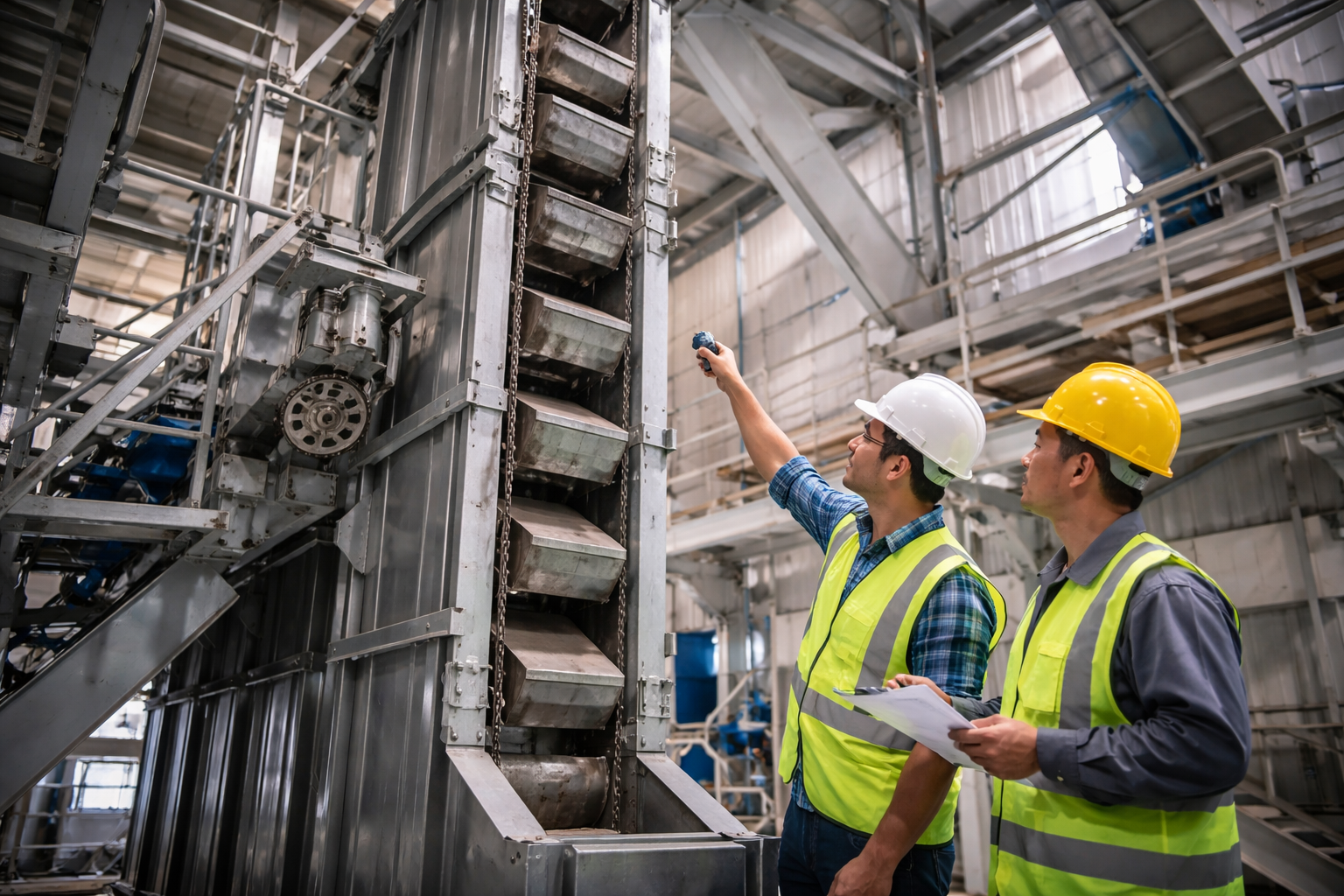
Operational problems in bucket elevators include belt or chain misalignment, material spillage, bucket damage, and drive failures. These issues typically arise due to improper loading, poor maintenance, incorrect tensioning, and abrasive materials. Early detection and preventive maintenance reduces downtime and repair costs.
A bucket elevator is essential for vertical material handling in industries such as agriculture, cement, mining, food processing, and bulk manufacturing. Despite their efficiency, operational problems can arise if components are improperly installed, overloaded, or poorly maintained.
Understanding common bucket elevator problems along with their causes and symptoms helps operators maintain performance, safety, and equipment longevity.
Table of Contents
Common Operational Problems, Causes, and Symptoms
1. Belt or Chain Misalignment
Cause Uneven tensioning, worn pulleys, improper installation, or material buildup.
Symptoms: Buckets rubbing against the casing, excessive noise, uneven wear, or frequent shutdowns.
Solution: Regularly inspect alignment, adjust take-up systems, and clean pulleys and guides. Proper installation and routine tension checks prevent recurring misalignment.
2. Loss or Damage of Bucket
Cause: Overloading, impact with oversized materials, corrosion, or loose fasteners.
Symptoms: Reduced conveying capacity, material leakage, vibration, or imbalance during operation.
Solution: Use buckets designed for the material type, inspect mounting hardware, and replace damaged buckets immediately to prevent cascading failures.
3. Material Spillage
Cause: Incorrect bucket spacing, improper loading, excessive speed, or worn discharge chutes.
Symptoms: Material accumulation at the boot section, increased cleanup requirements, and reduced efficiency.
Solution: Optimize feed rate, ensure proper bucket spacing, and maintain clean discharge points to allow smooth material flow.
4. Excessive Wear and Tear
Cause: Abrasive or corrosive materials, inadequate lubrication, or lack of protective liners.
Symptoms: Thinning of elevator casing, worn sprockets or pulleys, frequent part replacements.
Solution: Use wear-resistant materials, install liners in high-impact zones, and follow a consistent lubrication schedule.
5. Drive and Motor Failures
Cause: Overloading, electrical faults, poor ventilation, or worn bearings.
Symptoms: Overheating, frequent tripping, reduced speed, or complete shutdown.
Solution: Monitor load limits, maintain electrical systems, and perform routine motor inspections to ensure reliable operation.
6. Blockages in the Boot Section
Cause: Material buildup, moisture, or foreign objects entering the system.
Symptoms: Reduced lift efficiency, belt slippage, or sudden stoppages.
Solution: Keep the boot section clean, install access panels, and use proper drainage to prevent buildup.
Final Thoughts
Common bucket elevator operational problems are often the result of improper loading, misalignment, or inadequate maintenance. By identifying causes early and addressing symptoms proactively, operators can extend equipment life, improve safety, and minimize costly downtime.
Tech Trek, the best bucket elevator manufacturer in India delivers expert inspection, preventive maintenance, and customized material handling solutions designed to solve bucket elevator problems before they escalate. Read here to know why Bucket Elevators are better than Vertical Conveyors for Handling Bulk Materials.
FAQs
1. What are the most common operational problems in bucket elevators?
The most common bucket elevator operational problems include belt or chain misalignment, bucket damage, material spillage, excessive component wear, drive or motor failure, and boot section blockages. These issues typically result from improper loading, poor maintenance, or abrasive materials.
2. How do you identify early signs of bucket elevator failure?
Early warning signs include unusual noise, vibration, overheating motors, belt slippage, material buildup, uneven wear patterns, and reduced conveying capacity.
3. What is the role of preventive maintenance in reducing bucket elevator failure?
Preventive maintenance helps identify minor issues before they escalate, extends component life, improves safety, and reduces unplanned downtime. It is the most effective strategy for ensuring long-term bucket elevator reliability.