
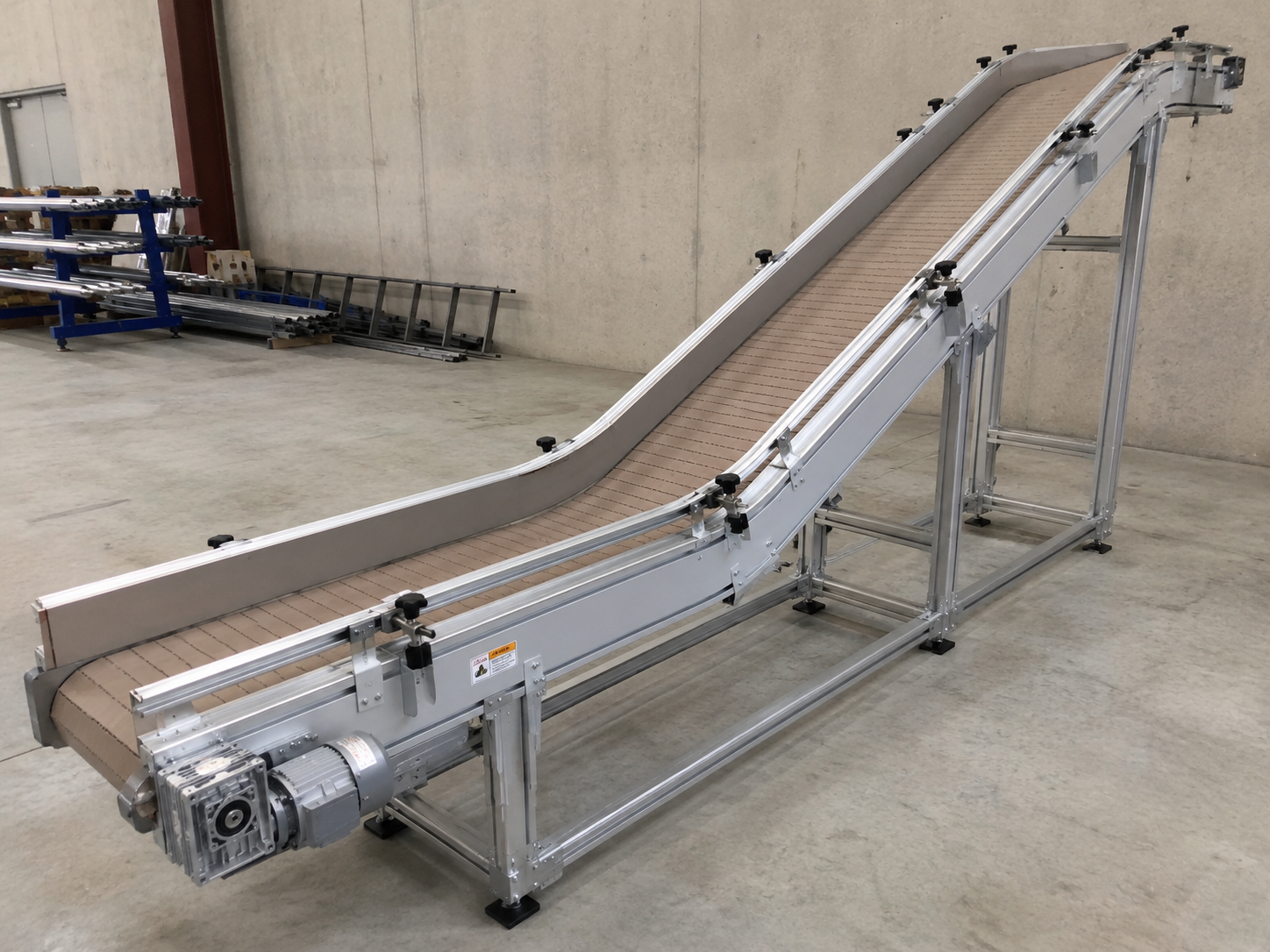
Aluminium belt conveyor systems have become an essential part of modern manufacturing facilities because they combine lightweight construction, durability, and efficient material handling. As industries continue to adopt automation and lean manufacturing practices, the need for conveyor systems that improve productivity while minimizing operational costs has never been greater. An aluminium belt conveyor offers a practical solution by enabling smooth movement of materials, reducing manual handling, and supporting continuous production across various industrial applications.
Manufacturing facilities today require equipment that is flexible, reliable, and easy to maintain. Whether producing automotive components, electronics, pharmaceuticals, food products, or consumer goods, businesses benefit from conveyor systems that can adapt to changing production requirements. An aluminium belt conveyor provides these advantages while helping manufacturers maximize efficiency and workplace safety.
Understanding an Aluminium Belt Conveyor
This belt conveyor is a material handling system built with a lightweight yet strong aluminium frame. Unlike heavier steel conveyor structures, aluminium conveyors are easier to install, relocate, and integrate into existing production lines.
The conveyor uses a continuous moving belt to transport products between workstations, assembly lines, packaging areas, inspection stations, and storage facilities. Because of its modular design and corrosion-resistant properties, it is widely used in industries where clean, efficient, and reliable material movement is essential.
Supporting Modern Manufacturing Processes
Manufacturing operations depend on uninterrupted product flow. Delays in moving materials between workstations can reduce production efficiency and increase operating costs.
An aluminium belt conveyor ensures continuous transportation throughout the production cycle, helping manufacturers maintain steady output while minimizing downtime.
Benefits include:
- Consistent product movement
- Faster production cycles
- Reduced bottlenecks
- Better workflow coordination
- Higher manufacturing efficiency
These improvements enable businesses to meet customer demands while maintaining product quality.
Lightweight Yet Durable Construction
One of the biggest advantages of an aluminium belt conveyor is its lightweight structure. Aluminium provides excellent strength without adding unnecessary weight to the conveyor system.
This lightweight construction offers several operational benefits:
- Easier installation
- Simple relocation
- Reduced structural load
- Faster production line modifications
- Lower installation costs
Despite being lightweight, aluminium offers excellent durability and performs reliably in demanding industrial environments.
Corrosion Resistance for Long-Term Performance
Manufacturing facilities often operate in environments where moisture, cleaning agents, or chemicals may affect equipment performance.
It naturally resists corrosion, making it suitable for industries such as:
- Food processing
- Pharmaceuticals
- Electronics
- Packaging
- Medical equipment manufacturing
The corrosion-resistant frame helps extend equipment life while reducing maintenance requirements.
Improving Material Handling Efficiency
Efficient material handling is critical for maximizing productivity. Manual transportation between production stages consumes valuable time and increases labor costs.
An aluminium belt conveyor automates product movement, ensuring materials reach each workstation quickly and consistently.
Improved material handling results in:
- Reduced manual handling
- Faster production flow
- Improved product consistency
- Better inventory movement
- Increased operational efficiency
Automation allows employees to focus on higher-value activities such as machine operation and quality inspection.
Supporting Industrial Automation
Automation has become a defining feature of modern manufacturing facilities. Conveyor systems play an important role by connecting different production processes into one continuous workflow.
An aluminium belt conveyor integrates easily with:
- Assembly lines
- Robotic systems
- Packaging equipment
- Inspection stations
- Sorting systems
- Automated storage solutions
This integration supports higher productivity while maintaining consistent manufacturing quality.
Optimizing Factory Floor Space
Efficient use of factory space directly impacts production capacity.
Because aluminium conveyor systems are compact and modular, manufacturers can create layouts that maximize available floor space while maintaining smooth material flow.
Businesses can:
- Improve workstation organization
- Increase production capacity
- Create flexible production layouts
- Simplify future expansion
- Reduce workspace congestion
Better space utilization contributes to improved operational performance.
Lower Maintenance Requirements
Equipment reliability is essential for maintaining continuous production.
An aluminium belt conveyor requires relatively low maintenance because aluminium does not rust and its lightweight frame experiences less structural stress during operation.
Routine inspections and preventive maintenance help ensure:
- Longer equipment life
- Reduced downtime
- Lower maintenance expenses
- Reliable production performance
These factors contribute to lower overall operating costs.
Enhancing Workplace Safety
Manual transportation of products increases physical strain and the possibility of workplace injuries.
Installing an aluminium belt conveyor creates a controlled material handling process that reduces lifting, carrying, and repetitive movements.
Safety improvements include:
- Reduced employee fatigue
- Lower injury risks
- Better workplace organization
- Controlled product movement
- Improved operational safety
A safer work environment supports higher employee morale and uninterrupted production.
Applications Across Multiple Industries
The versatility of an aluminium belt conveyor makes it suitable for numerous industrial sectors.
Common applications include:
- Automotive manufacturing
- Electronics assembly
- Food processing
- Pharmaceutical production
- Packaging industries
- Warehousing
- Logistics
- Consumer goods manufacturing
Its adaptability allows businesses to customize conveyor layouts according to operational requirements.
Choosing the Right Conveyor Solution
Selecting the right conveyor system depends on production capacity, product characteristics, available space, and future expansion plans.
Businesses looking for professionally engineered aluminium conveyor solutions can explore:
https://techtrekconveyor.com/products/aluminium-belt-conveyor
These conveyor systems are designed to support modern manufacturing operations with reliable performance, efficient material handling, and long-term durability.
Working with an experienced conveyor supplier ensures that the system is customized to meet the unique needs of each facility.
Preparing for Future Manufacturing Growth
As manufacturing becomes increasingly automated, conveyor systems will continue to play a central role in improving productivity and operational flexibility.
Modern aluminium conveyor systems are designed to accommodate future production changes, equipment upgrades, and automation technologies. Their modular construction allows manufacturers to expand or modify production lines with minimal disruption.
This flexibility makes aluminium belt conveyors a valuable long-term investment for growing businesses.
Conclusion
An aluminium belt conveyor is an ideal choice for modern manufacturing facilities because it combines lightweight construction, corrosion resistance, efficient material handling, and easy integration with automated production systems. It helps businesses improve productivity, reduce manual handling, optimize factory layouts, and maintain continuous workflow.
As industries continue to focus on operational efficiency and automation, investing in a high-quality aluminium belt conveyor provides long-term benefits in terms of reliability, safety, and cost savings. By choosing the right conveyor solution, manufacturers can build a stronger foundation for sustainable growth and improved production performance.
Frequently Asked Questions
What is an aluminium belt conveyor?
An aluminium belt conveyor is a material handling system that uses a lightweight aluminium frame and a moving belt to transport products efficiently within manufacturing and industrial facilities.
Why is an aluminium belt conveyor preferred over traditional conveyors?
It is lightweight, corrosion-resistant, easy to install, requires less maintenance, and integrates well with modern automated production lines.
Which industries commonly use aluminium belt conveyors?
Industries such as food processing, pharmaceuticals, automotive, electronics, packaging, logistics, warehousing, and consumer goods manufacturing commonly use aluminium belt conveyors.
How does an aluminium belt conveyor improve productivity?
It automates material transportation, reduces manual handling, maintains continuous workflow, and improves coordination between production stages.
Is an aluminium belt conveyor suitable for automated manufacturing?
Yes. It integrates seamlessly with robotic systems, packaging equipment, assembly lines, and other automation technologies.
What maintenance does an aluminium belt conveyor require?
Routine inspection of belts, rollers, motors, and drive components, along with regular cleaning and preventive maintenance, helps ensure reliable long-term performance.
How do businesses choose the right aluminium belt conveyor?
Businesses should evaluate production capacity, product dimensions, operating environment, available floor space, and future expansion requirements before selecting a conveyor system.